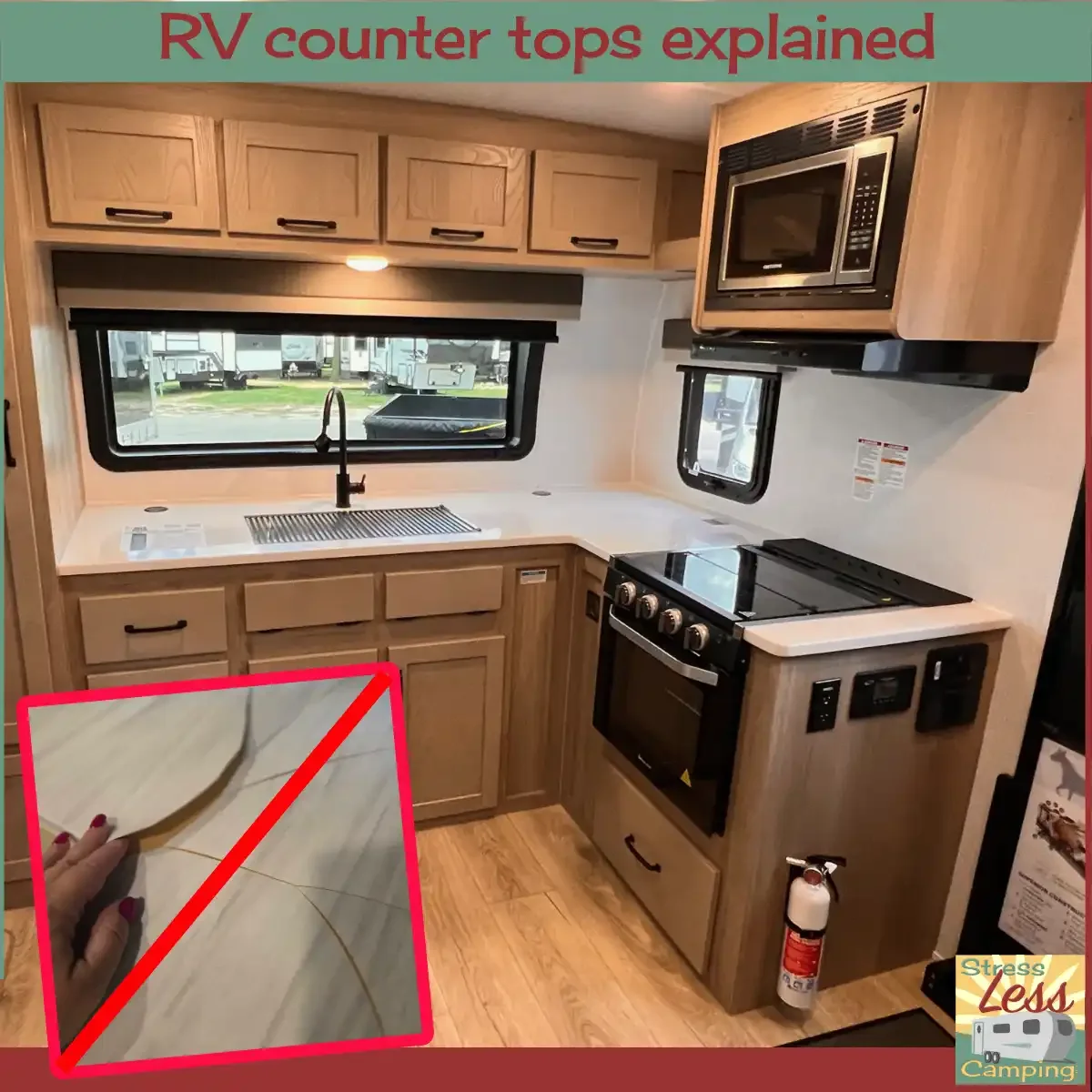
RV countertops - what's the best kind?
RV Countertops: What’s the best kind for your RV?
When shopping for a new RV, it’s easy to focus on the floor plan, appliances, sleeping arrangements, and entertainment system. But there’s another feature you’ll use almost every day: the RV countertop.
RV countertops have come a long way. Older and entry-level RVs often used lightweight laminate surfaces, while today’s luxury motorhomes and travel trailers may feature solid-surface materials, quartz-like composites, or even natural stone in a few rare situations. There are some newer RVs that have broken the mold on some materials that may also make a big difference in how resistant they are to problems.
The right countertop can make a big difference in how an RV kitchen looks and functions. But each material has advantages and disadvantages, particularly when weight, durability, maintenance, and cost are considered.
Here’s a look at the most common types of RV countertops and what you should know about each one.
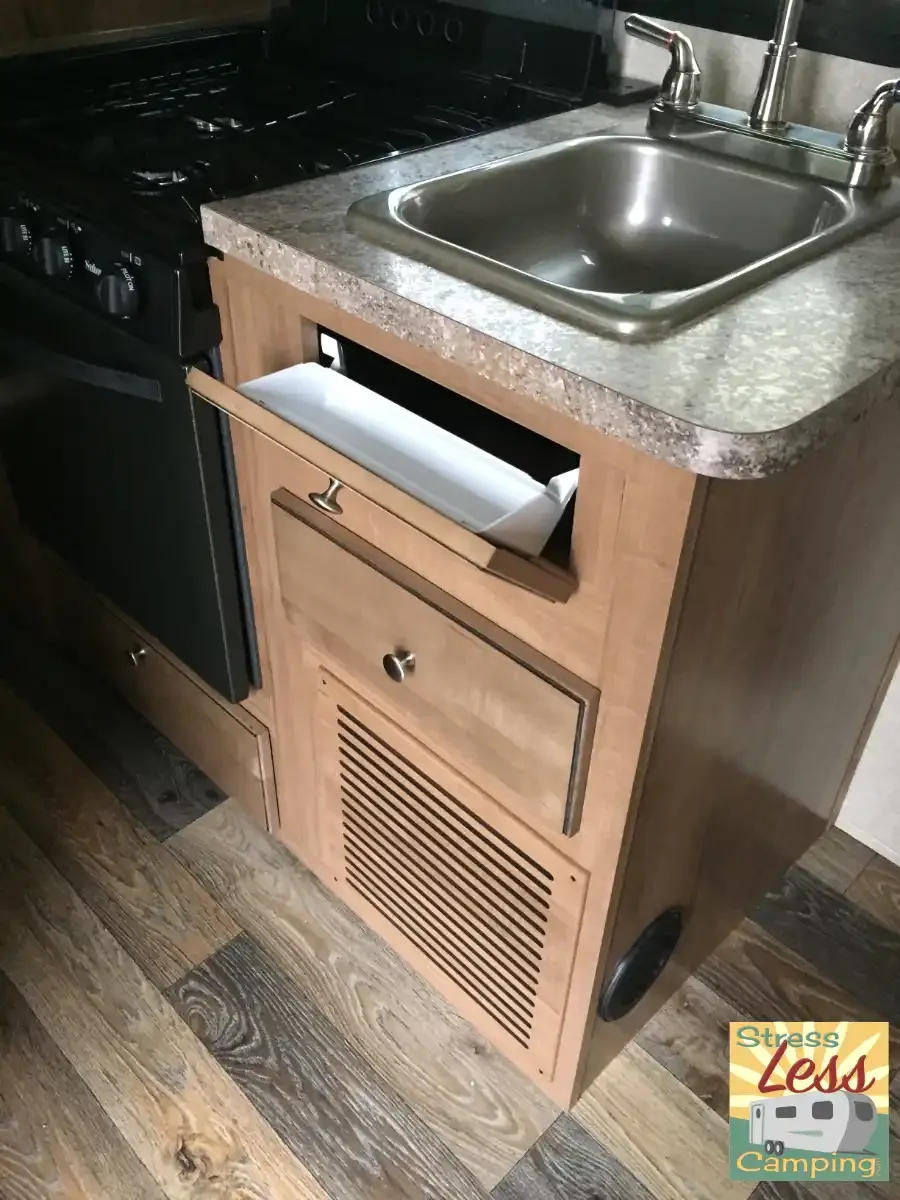
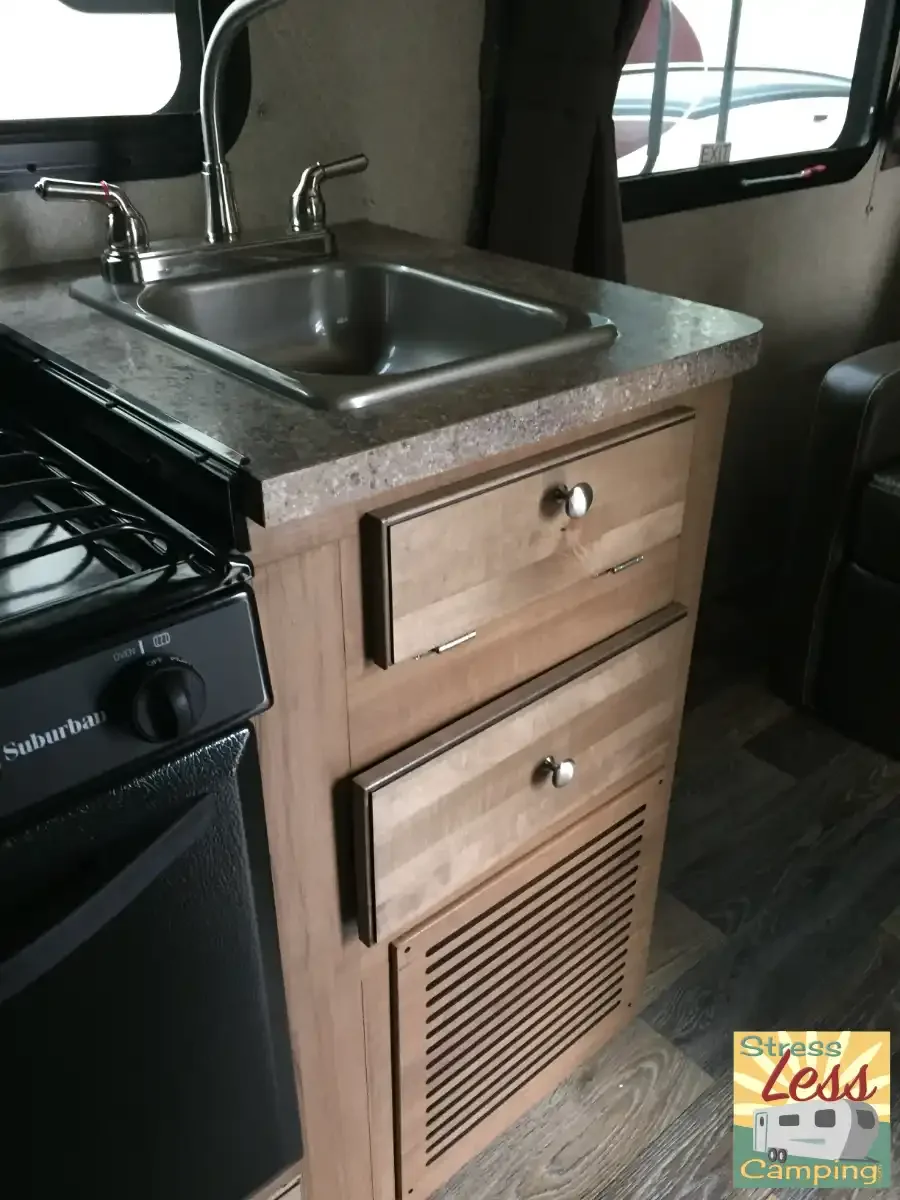
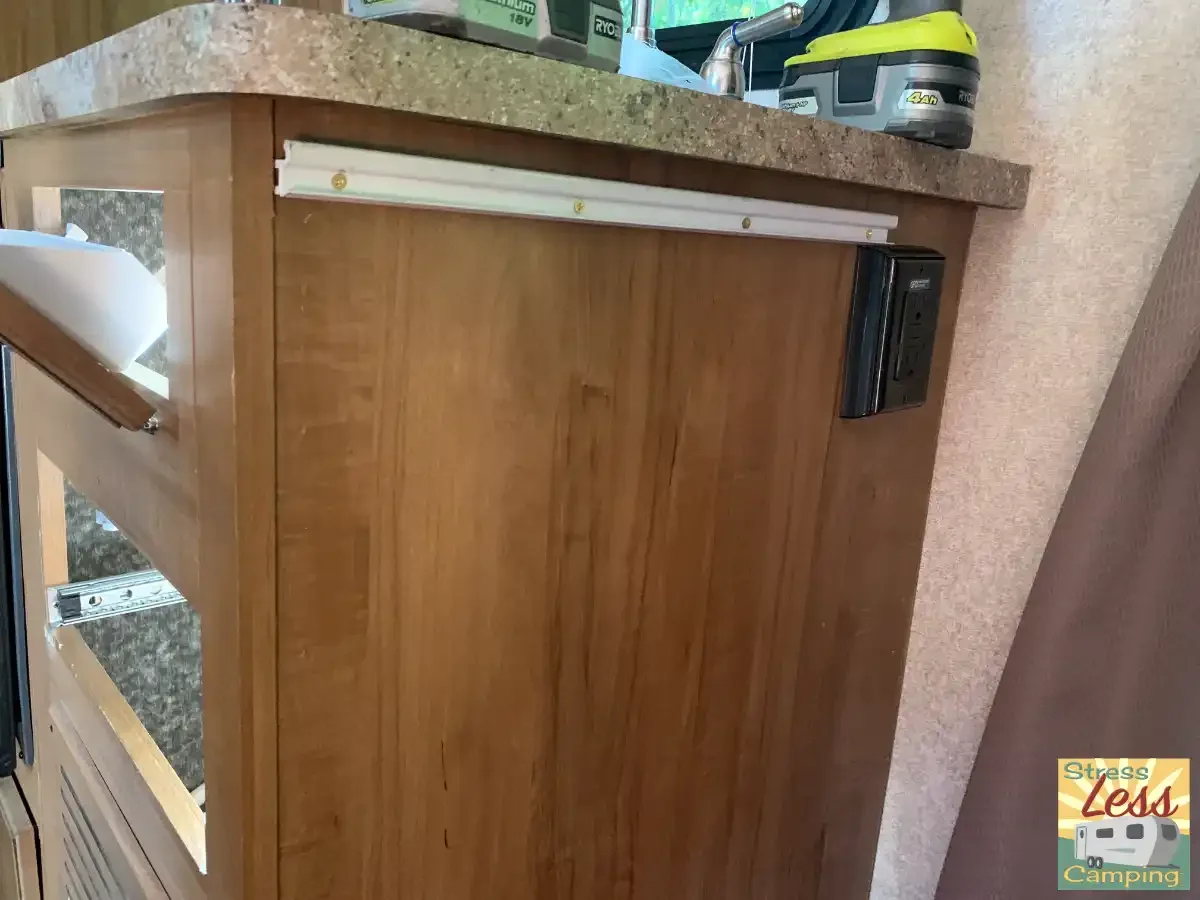
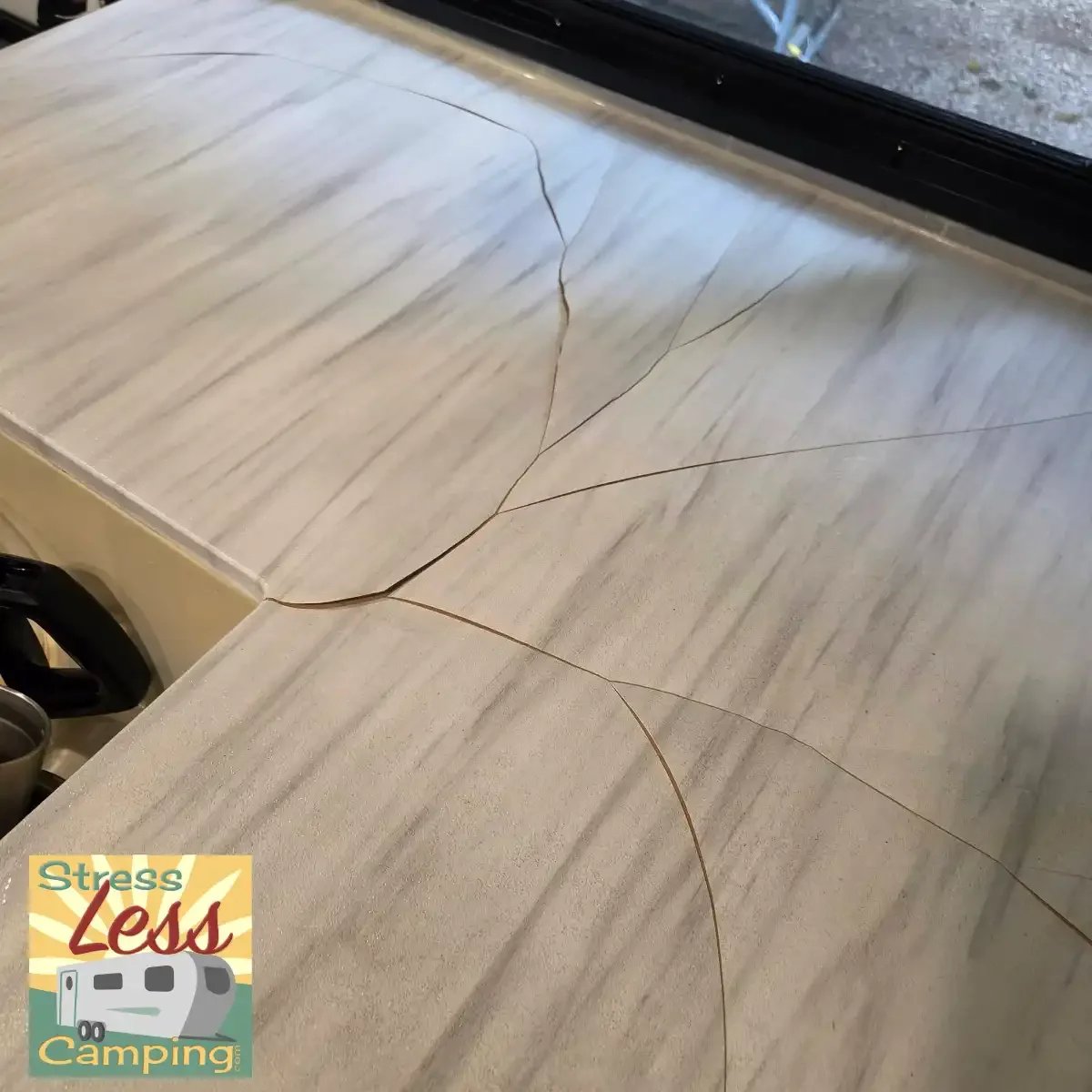
Heat can severely damage laminate counter tops
Laminate RV Counter Tops
Laminate is one of the most common countertop materials found in RVs, particularly in entry-level and mid-priced travel trailers.
A laminate countertop generally consists of an inexpensive building material covered with a decorative laminate surface. Modern laminates can imitate granite, marble, wood, concrete, and other materials.
There are different ways of doing this - two major ways are t-molding and thermofoil.
You might be familiar with t-molding because it has also been used in residential countertops in the past. Essentially it’s a substrate, usually a very inexpensive wood or even pressed cardboard, called chipboard, and then a surface is glued to that. In some ways the surface looks like vinyl flooring and isn’t much different. The big challenge is that the edge is also glued on and this is where water intrusion is most common.
Now we have Thermofoil which is much more common. Essentially it’s the same process and the same substrate but the plastic top is glued and essentially melted to the shape of the wood. While Thermofoil looks a lot like solid surface, a quick peek beneath the counter top will reveal the core material. Thermofoil is more resistant to water intrusion and looks nice but the plastic material can be damaged with a hot pan.
Advantages
Lightweight
Relatively inexpensive
Available in many colors and patterns
Easy to clean
Resistant to normal everyday wear
Helps keep RV cost down
Disadvantages
Can be damaged by sharp objects
Excessive heat can damage the surface
Water can cause problems if it gets into exposed edges or under the plastic outer layer
Generally doesn't have the premium appearance of solid-surface materials
For many RV owners, however, laminate is perfectly adequate. If keeping the RV’s purchase price down is important, laminate can be a very practical choice.

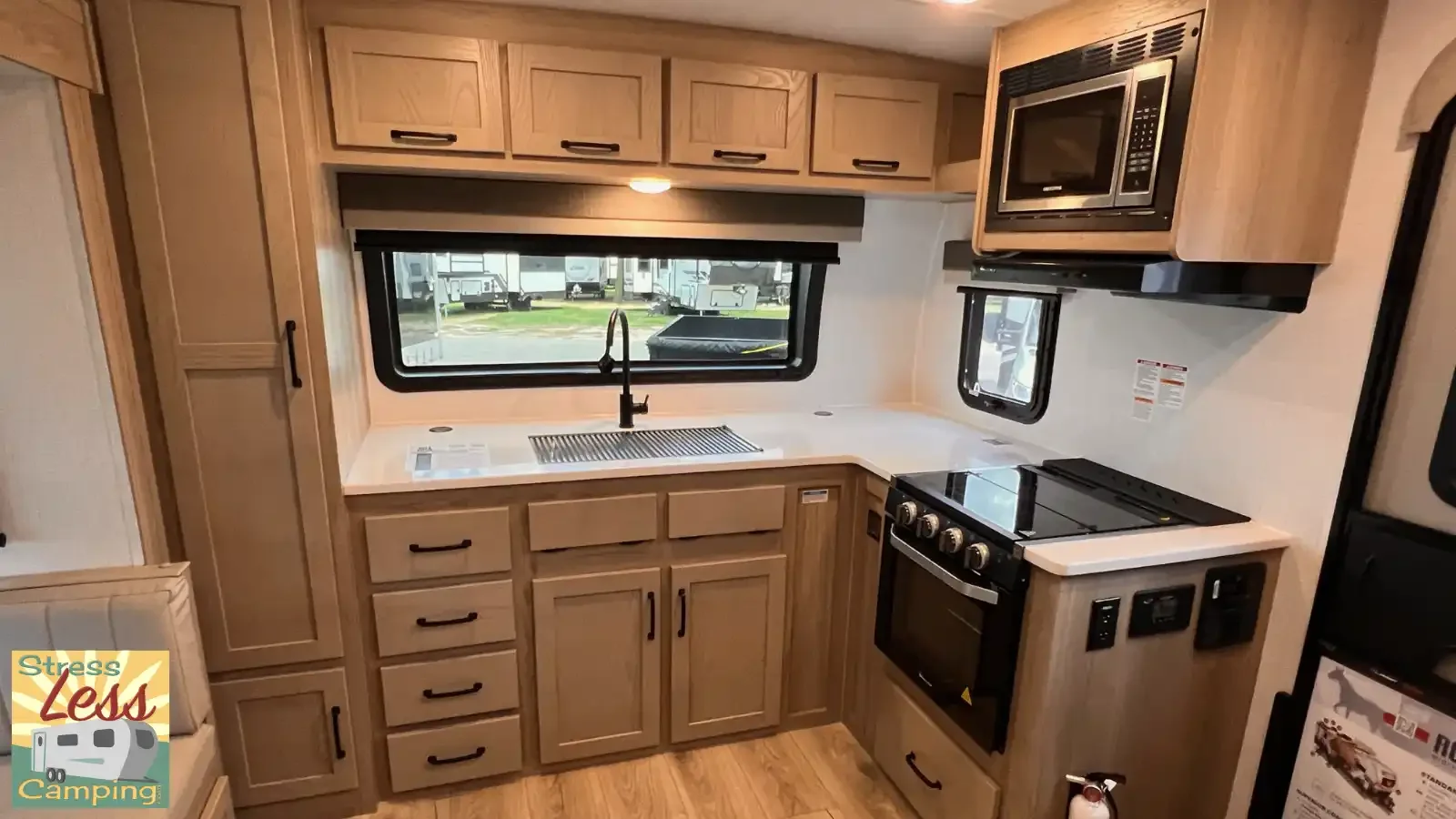
Solid Surface RV Counter Tops
Solid-surface countertops are a popular upgrade in higher-end RVs.
These countertops are manufactured from synthetic materials and can be made to look like natural stone. One advantage is that the material is consistent throughout the countertop rather than simply being a thin decorative layer.
Small scratches and some surface damage can often be sanded or polished out, depending on the particular material.
Advantages
Attractive appearance
More substantial feel than laminate
Available in numerous colors and patterns
Nonporous
Generally easy to clean
Some minor damage can be repaired
Disadvantages
Heavier than laminate
More expensive
Can be scratched
Very hot cookware can potentially damage some materials
Solid surface is an especially nice compromise for RV owners who want something more upscale without the substantial weight of natural stone.
Quartz and Engineered Stone Counter Tops
Some luxury RVs use quartz or engineered-stone countertops. These provide the appearance and feel of a high-end residential kitchen.
Quartz countertops are manufactured using engineered stone materials and can be extremely durable.
The big issue in an RV is weight.
A countertop material that makes perfect sense in a stationary house may not make as much sense in a vehicle that has to stay within its gross vehicle weight rating.
Advantages
Premium appearance
Very durable
Resistant to stains
Easy to clean
Wide variety of patterns
Excellent residential-style appearance
Disadvantages
Heavy
Expensive
Can be difficult to repair or replace
Adds considerable weight to an RV
If you find quartz countertops in an RV, it’s worth considering how much additional weight they contribute to the overall vehicle. These are usually found in Class A diesel pushers where weight is less of an issue.

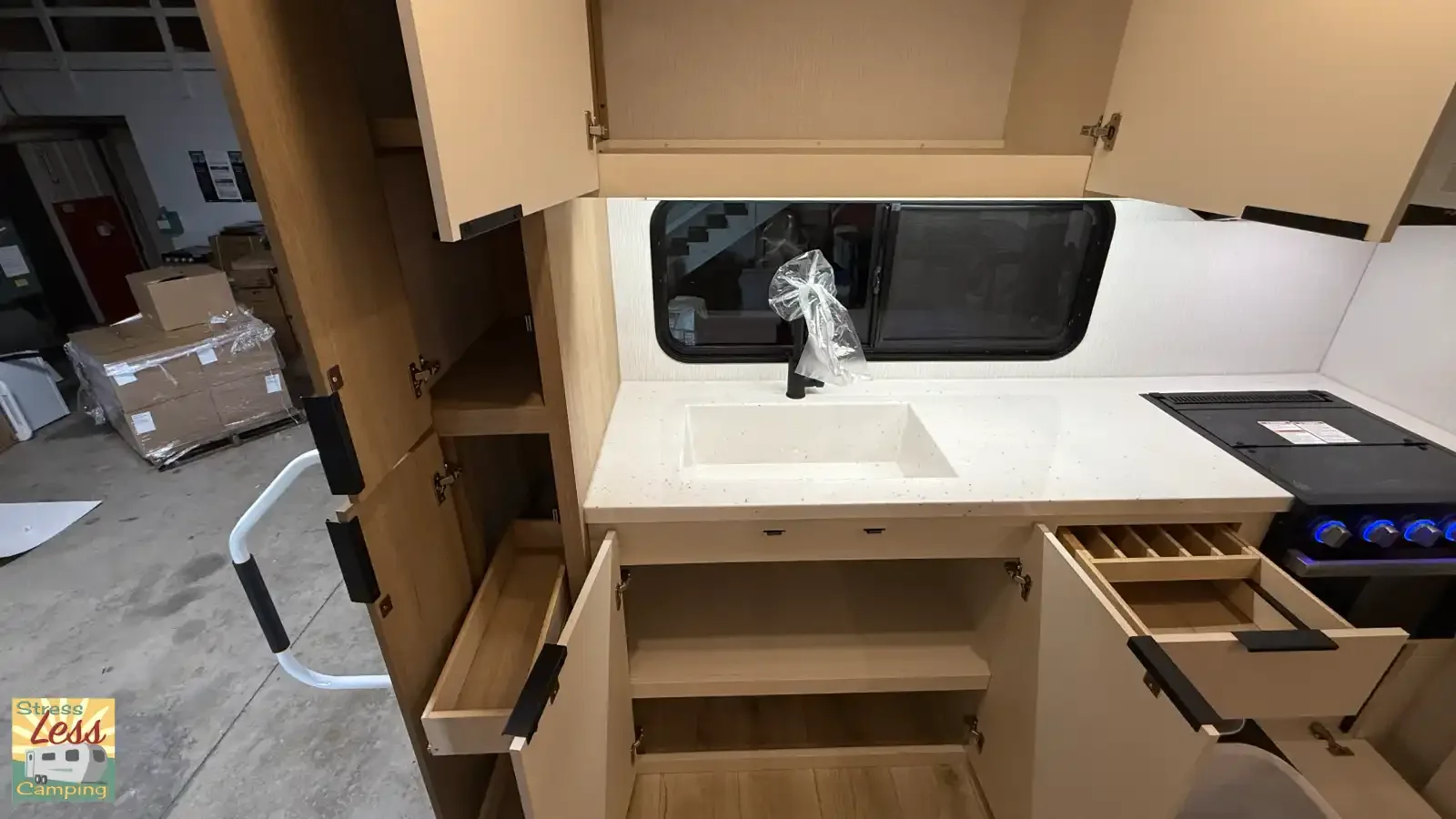
Fiberglass Counter Tops
While not very common, fiberglass is finding its way to RV countertops. You’ll find it in trailers like Casita, Escape and Bigfoot simply because those trailer manufacturers already are working with the material. I was also surprised to find it in Winnebago’s Thrive line.
Fiberglass can be molded to whatever shape you wish and can be molded to look like a lot of other materials as well as incorporate some of its own unique color and decor patterns.
Advantages
Lightweight
As heat resistant as thermofoil and solid surface
Can incorporate unique styling elements
Disadvantages
The types of resin and components can vary in quality and performance depending on the builder’s choices
Butcher Block and Wood Counter Tops
Butcher block and wood countertops are popular in the aftermarket because they can give an RV kitchen a warm, residential appearance. But, from a production standpoint, I don’t know of any RV companies are using these as original equipment.
Wood countertops can be particularly attractive in smaller RVs where a little bit of natural material can make the kitchen feel more inviting.
Advantages
Warm, attractive appearance
Can be relatively lightweight
Can often be refinished
Easy to customize
Works well with rustic and modern RV interiors
Disadvantages
Requires more maintenance than many synthetic materials
Can stain
Can absorb water if not properly sealed
Can scratch or dent
Requires care around sinks and wet areas
A properly finished wood countertop can last a long time, but it isn't a completely maintenance-free option.
Acrylic and Other Lightweight Countertops
Some RV manufacturers use acrylic or other lightweight synthetic countertop materials to provide a more upscale appearance without the weight of stone.
These materials can be particularly useful in RVs because manufacturers have to balance appearance with payload capacity.
Advantages
Lightweight
Easy to clean
Available in many colors
Can provide a high-end appearance
Often easier to work with than stone
Disadvantages
Can scratch
Can be damaged by excessive heat
May not feel as substantial as natural stone
Quality varies considerably between materials
For RV use, lightweight synthetic materials can be a very sensible solution.
RV Countertop Extensions
Technically, a countertop extension isn't a countertop material, but it's an important part of RV countertop design.
Many RV kitchens have very limited counter space. Manufacturers solve this by installing folding, hinged, sliding, or removable extensions.
An extension can turn a small kitchen into a much more usable workspace.
When shopping for an RV, look at how the extension is supported. A countertop extension that feels solid when you're preparing dinner is much more useful than one that flexes every time you put something on it.
What Is the Best RV Countertop Material?
There isn't one answer that works for every RV owner.
For lightweight RVs: Laminate and lightweight synthetic materials make a lot of sense.
For a more upscale appearance: Solid-surface countertops offer an excellent combination of appearance, durability, and reasonable weight.
For luxury RVs: Quartz, engineered stone, and granite can provide a residential-quality kitchen, although the additional weight needs to be considered.
For a warm, traditional look: Butcher block or other wood countertops can be an excellent choice.
Don’t Forget About RV Weight
One of the biggest differences between shopping for a countertop for a house and shopping for one in an RV is weight.
A beautiful stone countertop might be perfectly reasonable in a house. In an RV, however, every additional pound matters.
When comparing RVs, don't just look at the countertop material. Look at the GVWR, cargo carrying capacity, and actual loaded weight of the RV.
That gorgeous countertop isn't such a great feature if it contributes to an RV that is difficult to keep within its weight limits.
Final Thoughts
RV countertops are more than just a place to prepare a sandwich. They're a major part of the kitchen's appearance and functionality, and the material can tell you quite a bit about how an RV was designed.
Laminate remains a practical choice for many RVs, while solid surface provides a nice step up in appearance and durability. Quartz and granite offer a luxury look but come with a significant weight penalty. Wood and butcher block provide a completely different aesthetic and can be an excellent choice for the right RV owner.
The best RV countertop is ultimately the one that provides the combination of durability, appearance, maintenance, and weight that fits your particular RV lifestyle.