What's there to do in Miami, Oklahoma on Route 66?
Route 66 through Miami, Oklahoma. Don’t call it Miami
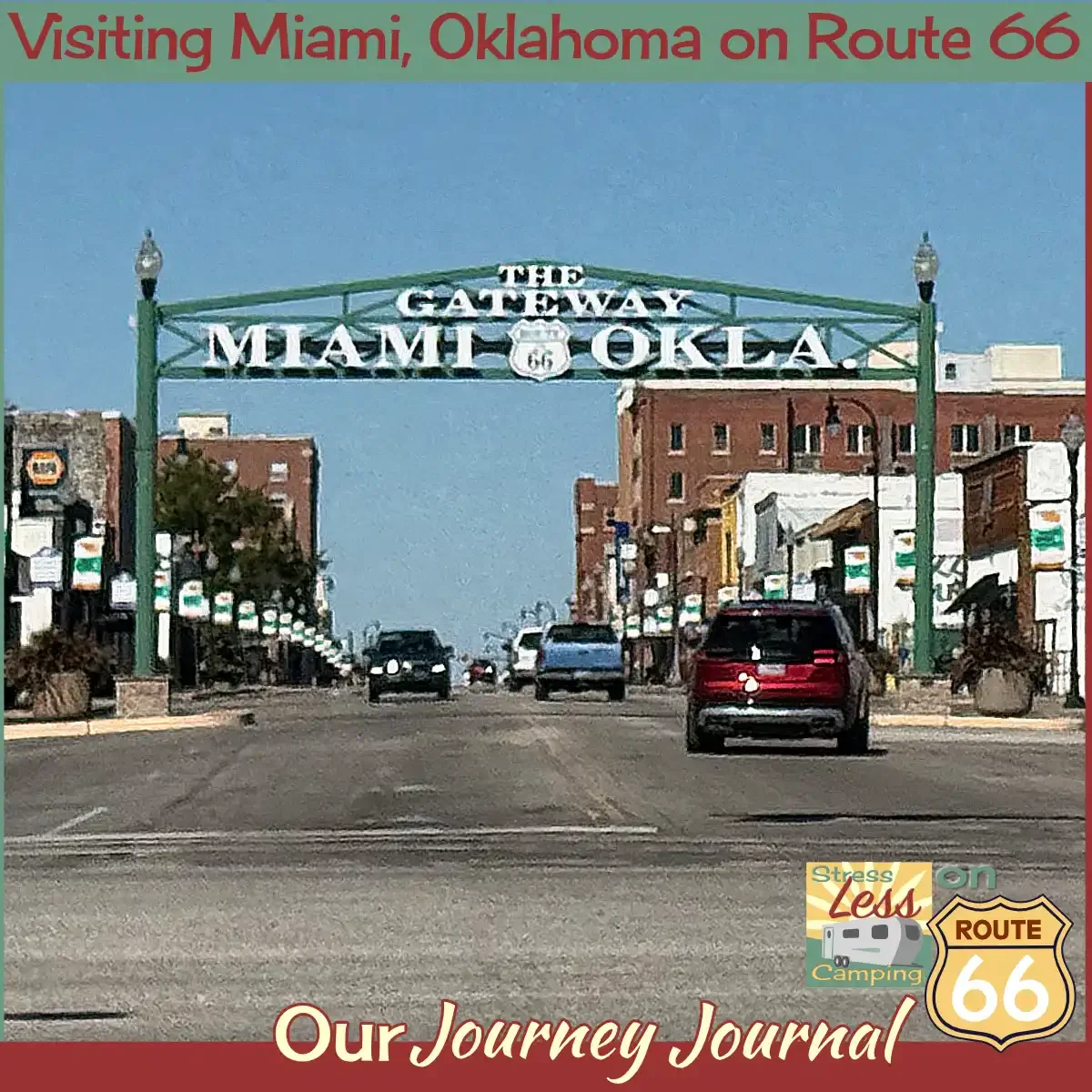
Miami, Oklahoma is a part of Route 66 and offers a number of unique reasons you’ll want to stop on your Mother Road adventure. But, before you even get to town, Miami isn’t really Miami. Sort of.
It’s in Miami - but don’t call it Miami
If you’re passing through this part of Route 66 in Oklahoma you’ll note that the name of the place is spelled just like the town in Florida. But if you use the same pronunciation, the locals will know you’re from out of town.
The town was established in 1891 and named after the Miami Indians. The Miami people call themselves Myaamia. Over time residents adopted the unique “My-AM-uh” pronunciation. So when you say it like they say it, you might get a big smile or even a high five.
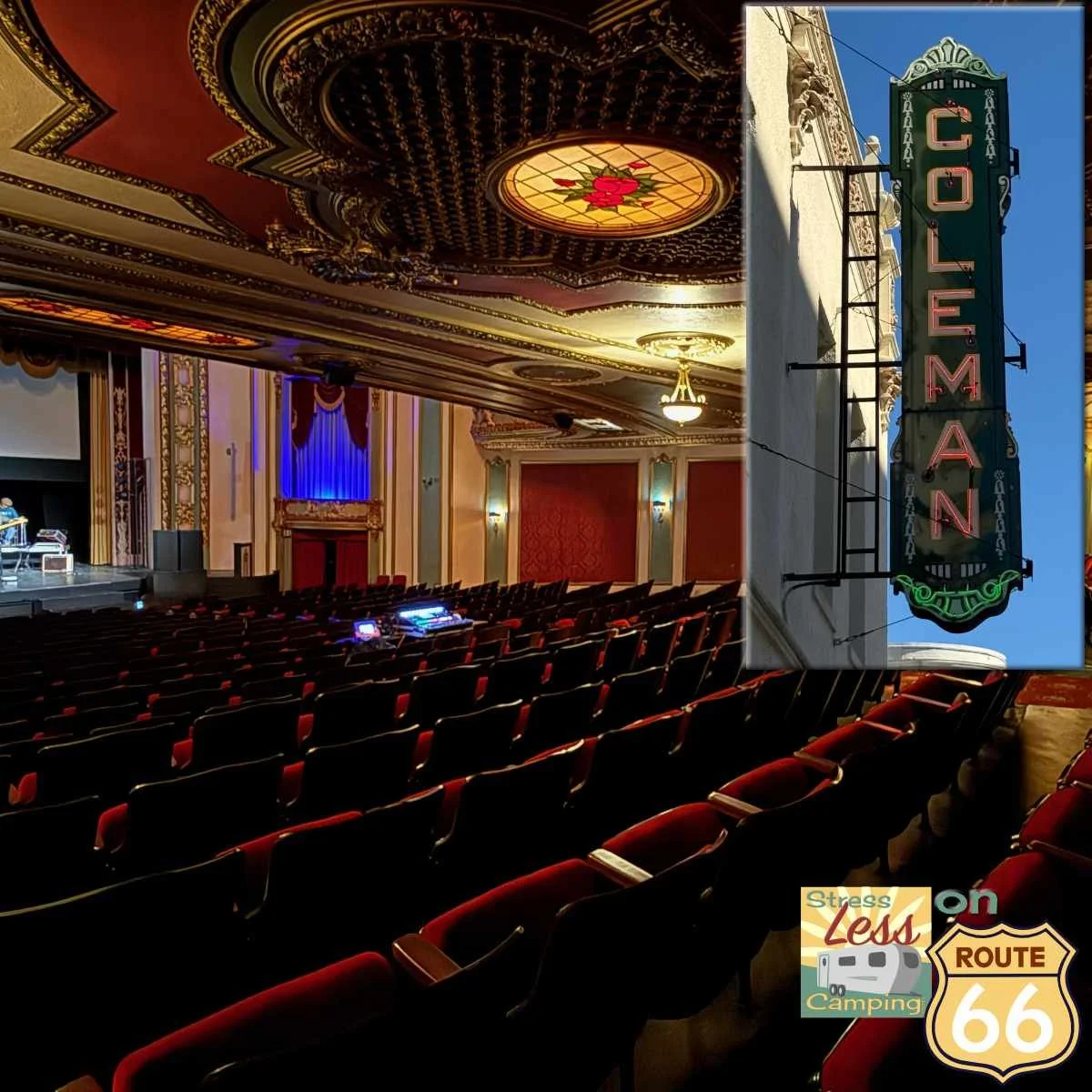
In addition to the beautifully lavish Coleman Theater, Miami is also home to Newell Coach. Newell is arguably the premier Class A RV in the U.S. although some owners of other brands could possibly argue that.
Coleman Theatre in Miami, Oklahoma: A Must-See Historic Route 66 Landmark
If you’re traveling Historic Route 66 through Oklahoma, make time for a stop at the Coleman Theatre in Miami, Oklahoma. This spectacular historic theater is one of the Mother Road’s most impressive architectural treasures, offering visitors a glimpse into the golden age of American entertainment.
With its ornate Spanish Revival exterior, lavish interior, and remarkable history, the Coleman Theatre is much more than a place to watch a show. It’s a living piece of Route 66 history and a worthwhile stop for road trippers, architecture enthusiasts, history buffs, and RV travelers exploring northeastern Oklahoma.
The History of the Coleman Theatre
The Coleman Theatre opened its doors on April 18, 1929, during an exciting era for American entertainment. Built by local mining magnate George L. Coleman Sr., the theater was designed to bring big-city entertainment and luxury to the growing community of Miami.
Construction cost approximately $600,000, an enormous investment for the time. When the theater opened, it could accommodate 1,600 people, with tickets selling for just $1.
The Coleman was originally designed as both a movie palace and a vaudeville theater. Audiences could enjoy silent films, early talking pictures, live musical performances, comedy, and other stage entertainment. The building quickly became an important gathering place for the local community.
Its opening came just a few years after Route 66 was established in 1926. As travelers began exploring America's new highway system, Miami became an appealing stop along the Mother Road, and the Coleman Theatre offered visitors an entertainment experience they might otherwise expect to find in a much larger city.
The theater was added to the National Register of Historic Places in 1983. In 1989, the Coleman family donated the building to the City of Miami, helping secure its future. A major restoration effort, supported by public funding, private contributions, and community volunteers, returned much of the theater to its former glory.
Today, the Coleman Theatre continues to host performances and welcome visitors interested in its remarkable history.
An Architectural Treasure on Route 66
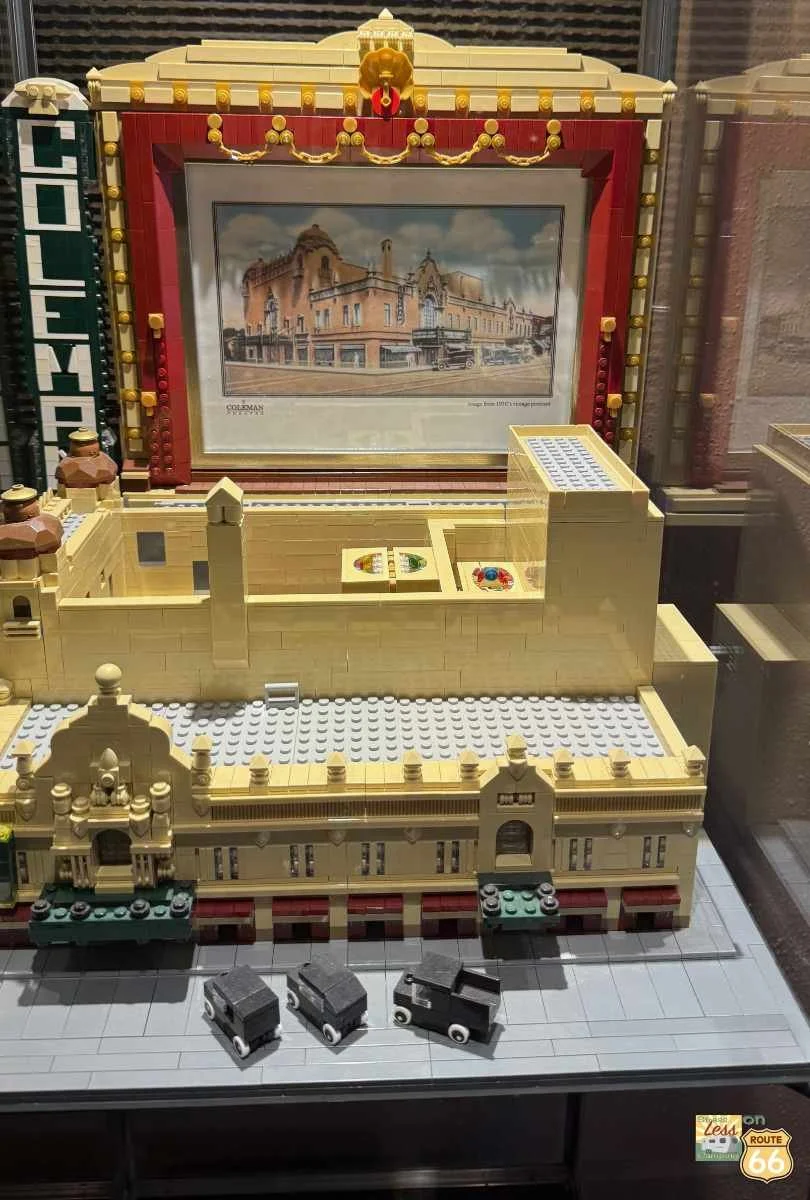
One of the first things you’ll notice about the Coleman Theatre is its distinctive exterior. Designed in the Spanish Mission Revival style, the building features decorative architectural details that make it stand out along downtown Miami’s Main Street.
Look closely and you’ll discover ornate terra-cotta decorations, sculpted figures, arched windows, and distinctive tower elements. The exterior reflects the glamorous architectural styles that were popular during the 1920s, when movie palaces were designed to make a trip to the theater feel like a special occasion.

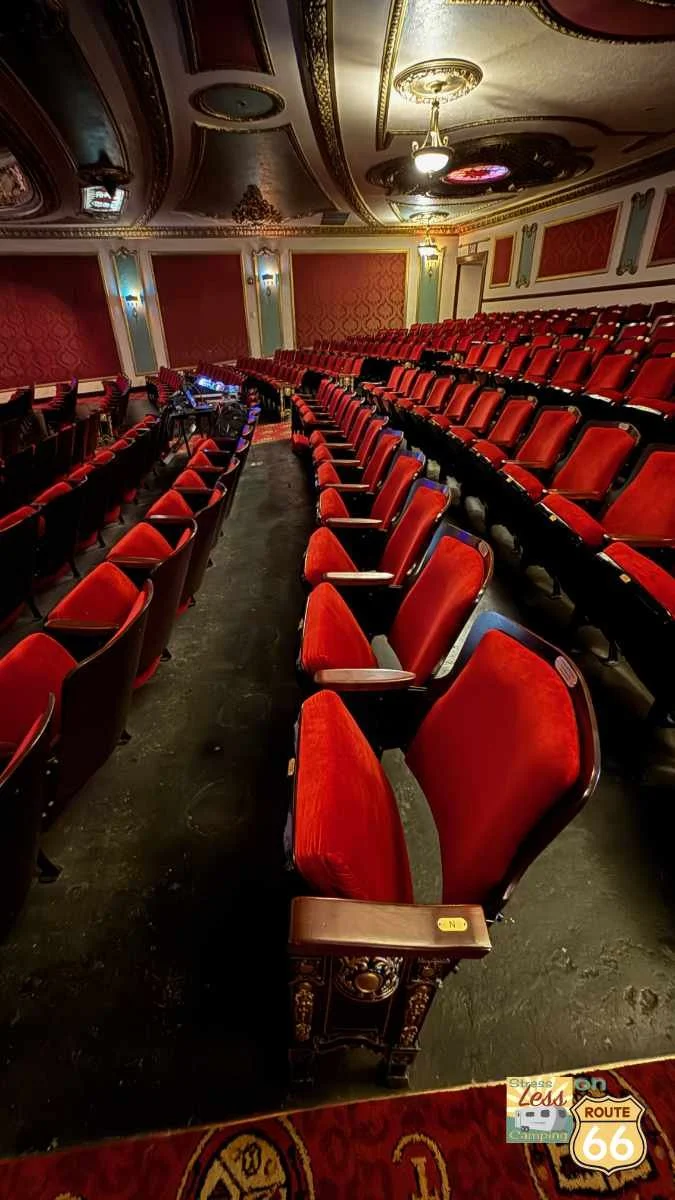
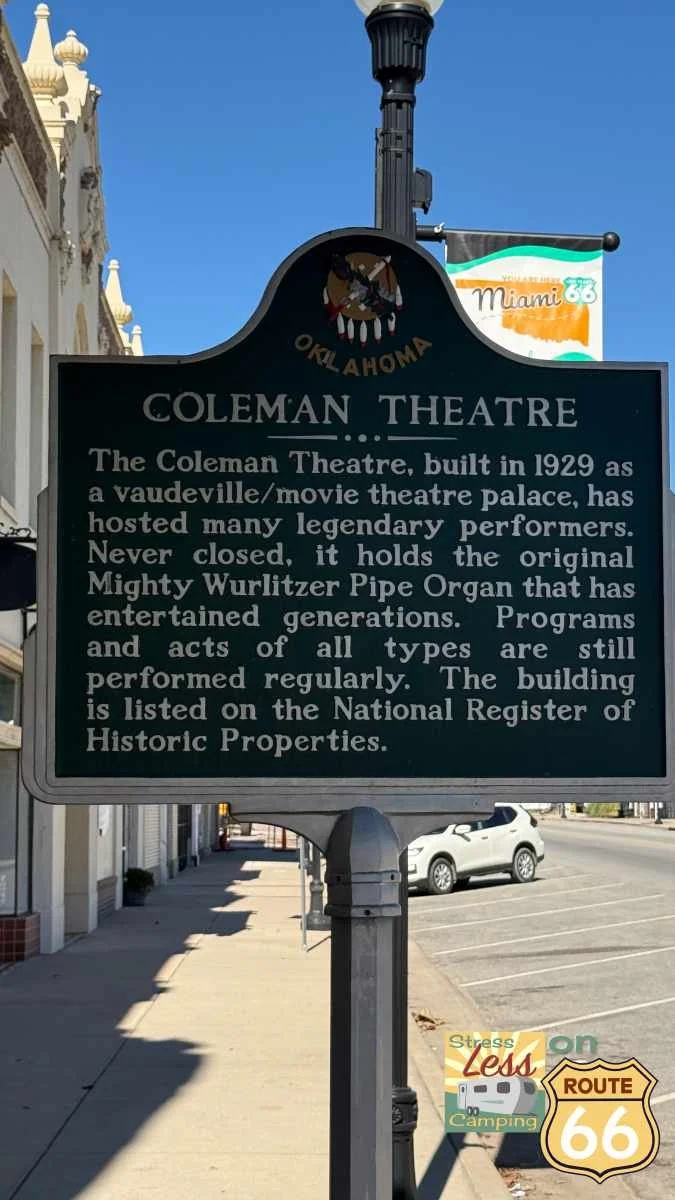

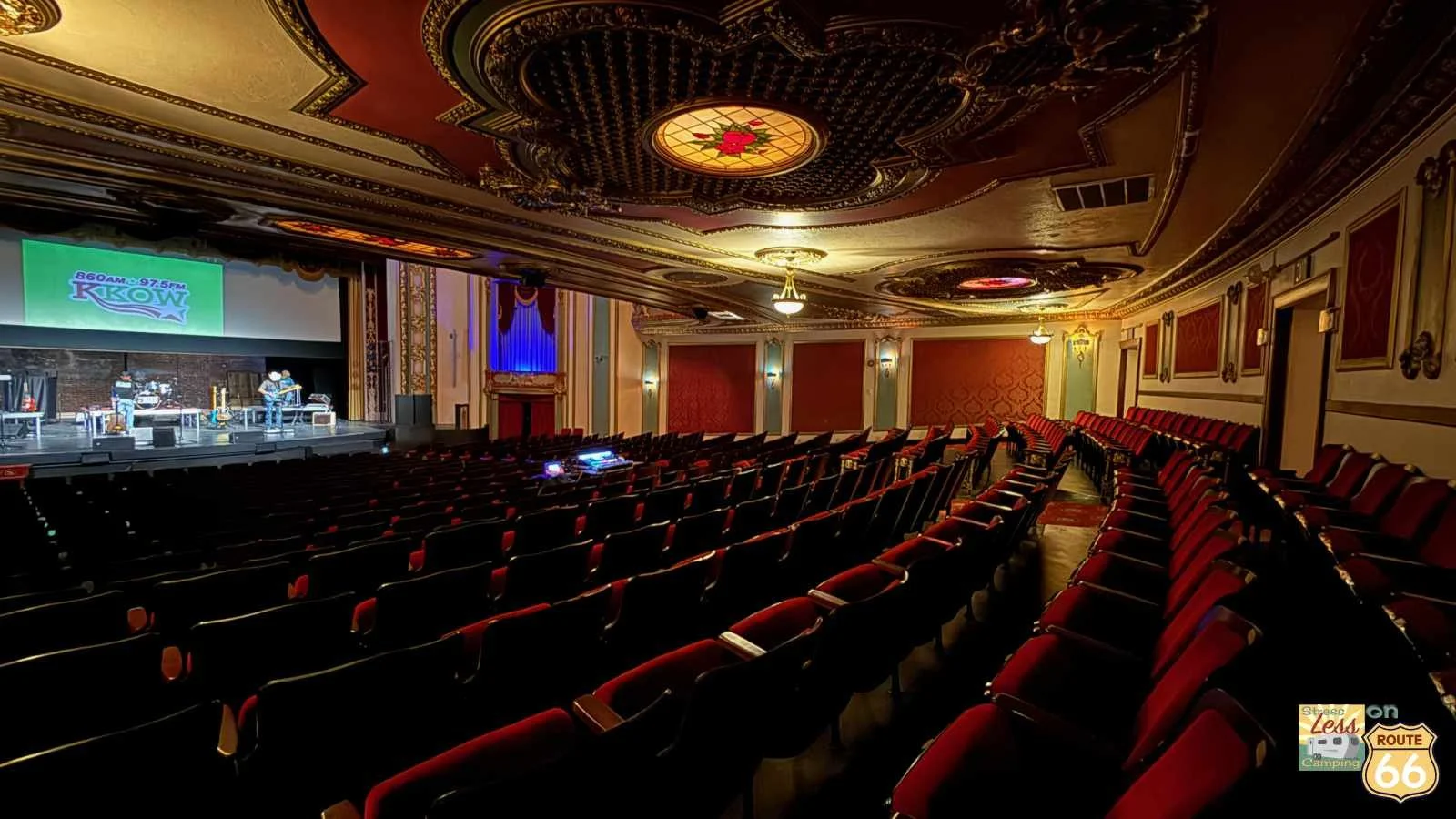

Step inside, and the atmosphere changes dramatically.
The interior is decorated in an elaborate Louis XV style, featuring gilded details, decorative plasterwork, stained glass, luxurious wall treatments, and elegant carved staircases. A magnificent chandelier adds to the sense of grandeur.
The theater was designed to impress audiences before the performance even began. In an era when going to the movies was often an event in itself, buildings like the Coleman helped transform ordinary entertainment into an unforgettable experience.
For photographers and architecture enthusiasts, the building offers plenty of details worth examining. Even visitors who aren't particularly interested in theater history will appreciate the craftsmanship and attention to detail.
The Mighty Wurlitzer Pipe Organ
One of the Coleman Theatre's most celebrated treasures is its original Mighty Wurlitzer pipe organ.
Hearing the Mighty Wurlitzer theater pipe organ installed in the Coleman Theater in Miami, Oklahoma.
Built in 1928 and installed before the theater opened, this remarkable instrument was designed to accompany silent movies with music and sound effects. Before recorded sound became standard in motion pictures, theater organs helped create atmosphere, build suspense, and bring stories to life. But the timing was interesting as “talkies” were just starting to come of age as the theater opened.
The Coleman’s Wurlitzer is especially significant because it remains in its original home. The instrument was once thought to be lost, but restoration efforts brought it back to the theater.
We were told by a docent, who proclaimed to be 85 years old, that she herself danced on that stage as a youngster. But she also relayed that, when the restoration starter looking for a replacement to the original organ, the actual original organ was found not far away. The instrument’s owner at the time planned to install it in his home, which isn’t out of the question for Wurlitzer enthusiasts, but ultimately agreed to sell the organ back to the theater.
These organs aren’t the small contained units in your grandparents’ homes. Instead they have ranks of pipes that can be placed throughout a venue. Some of these pipes are much larger than a person and huge bellows provide the air to give the pipes their iconic sound. This incredible organ just fills the Coleman with a beautiful sound and I feel very fortunate to have heard it.
Today, the Mighty Wurlitzer remains part of the venue's historic identity. It can be heard during selected programs and special screenings, allowing modern audiences to experience a style of entertainment that once captivated moviegoers across America. The docent we had actually interrupted a band setting up to demonstrate the beautiful instrument. I absolutely love Wurlitzer Theater Pipe Organs and this setting just shows off the sound.
Since these were originally intended to be the entire soundtrack for a silent movie many of them incorporate car horns, whistles, maracas, an actual piano, and many other items to bring an otherwise-silent movie to life.
If you're planning a visit, check the theater's event calendar to see whether an organ performance or silent film program is scheduled during your trip.
Famous Performers and a Continuing Entertainment Tradition
Over the decades, the Coleman Theatre has welcomed a variety of performers and entertainers. Its stage has connections to notable names including Will Rogers, Tom Mix, Bing Crosby, Jim Thorpe, Sally Rand, and magician Harry Blackstone.
These historic associations help illustrate the theater's importance during an era when vaudeville and live entertainment were central to American popular culture.
The Coleman has evolved with the times, transitioning from its early vaudeville and movie-palace days into a venue for a wide range of cultural events. Today's programming may include concerts, dance performances, ballet, opera, films, and community productions.
Rather than becoming simply a preserved historic building, the Coleman Theatre remains an active part of Miami's cultural life.
That combination of history and continuing use is what makes the theater such a special destination for Route 66 travelers.
Take a Tour of the Coleman Theatre
You don't have to attend a performance to appreciate the Coleman Theatre. Visitors can arrange tours that provide an opportunity to explore the building and learn more about its history, architecture, restoration, and famous pipe organ.
A tour is an excellent way to discover details that might otherwise go unnoticed, from the decorative interior finishes to the stories behind the theater's original design.
Because tour schedules and access can change, contact the theater before arriving. Donations are used to support preservation and maintenance, and the theater encourages contributions from visitors.
Coleman Theatre visitor information
Address: 103 North Main Street, Miami, Oklahoma 74354
Phone: 918-540-2425
Website: https://thecolemantheatre.org/
Tours: Check the official website or call ahead for current tour hours, availability, and group arrangements.
If you're traveling with a group or planning a special visit, advance arrangements are especially helpful.
Waylan’s Ku-Ku Burger: A Classic Route 66 Stop in Miami, Oklahoma
If you’re traveling historic Route 66 through northeastern Oklahoma, there’s a good chance you’ll come across one of the Mother Road’s most memorable roadside attractions: Waylan’s Ku-Ku Burger in Miami, Oklahoma. With its distinctive bird-shaped mascot, nostalgic fast-food atmosphere, and connection to classic American roadside dining, Ku-Ku Burger is a fun stop for anyone who loves Route 66 history, vintage Americana, and a good burger.
For RV travelers exploring the historic highway, this is the kind of place that makes a road trip special. It’s not just about getting something to eat. It’s about experiencing the roadside culture that helped make Route 66 an American legend.
The Story Behind Waylan’s Ku-Ku Burger
We first found out about Waylan’s Ku-Ku Burger through the Route 66 Podcast where host Anthony Arno interviewed Eugene Waylan in episode 64.
The original Ku-Ku Burger chain was founded by entrepreneur James H. (Jim) Dandy in 1965, and it became known for its unusual name, distinctive bird mascot, and quick-service menu.
Waylan recounted the story of how he bought into the franchise and moved to Miami, Oklahoma. He had been operating the restaurant without a great deal of others for some time although, when we got there, the dining room was closed due to lack of personnel.
In fact only the drive-thru was open and, almost as a joke, I stepped on the air hose to ring the service bell and they actually took my order. By then cars were also showing up so I knew the place was in business.
There had been over 200 of the franchises at one point but a variety of circumstances means that this is the last one. Waylan described how the original building had the Ku-Ku bird on the top that actually moved a bit, but today that bird sings no more.
Through entrepreneurial operation the place had grown significantly and, at one point, had regular car shows and other draws. Unfortunately the lady in the drive-thru indicated that Eugene Waylan was in poor health which explains why only the drive-thru was open.

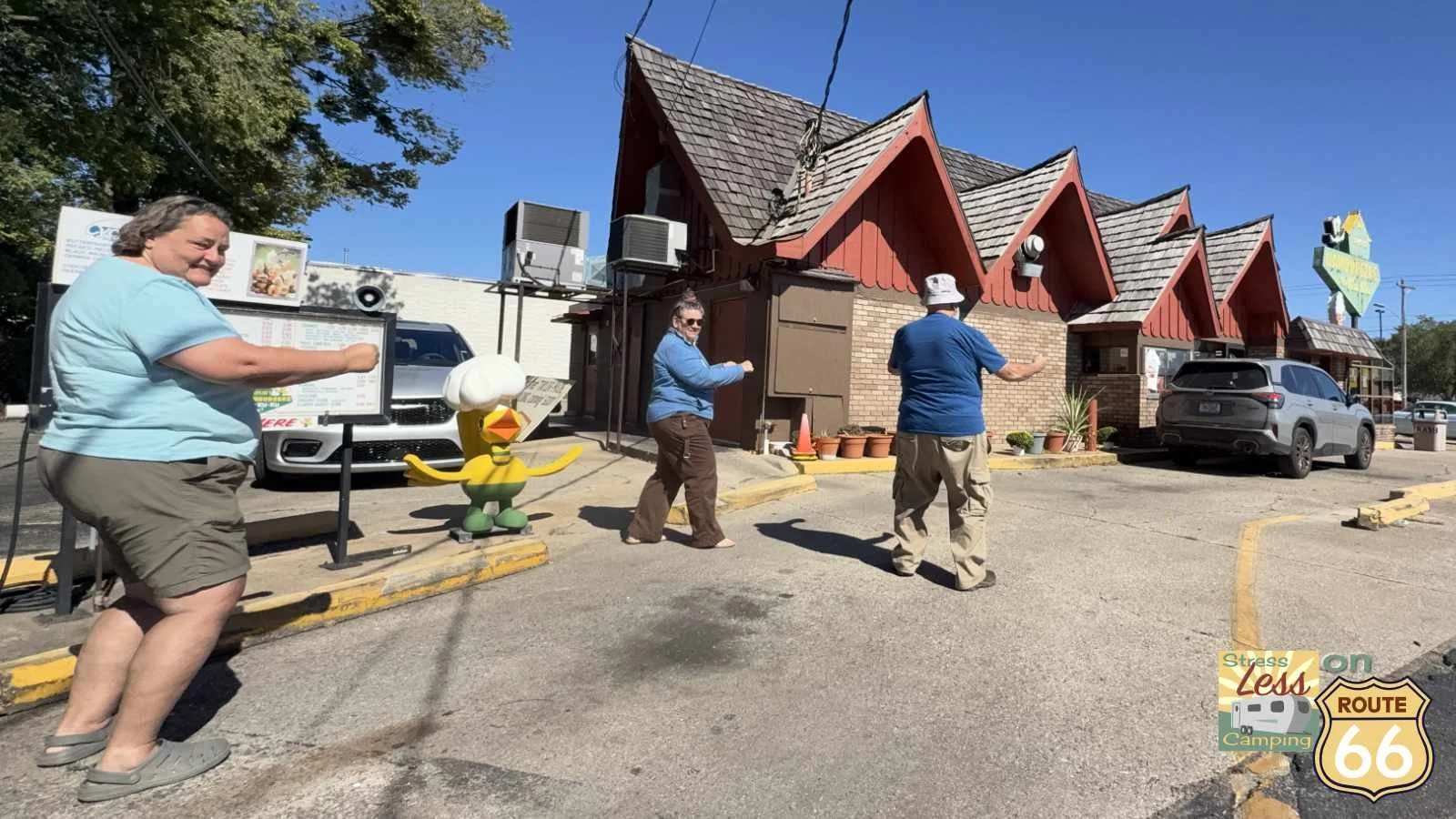
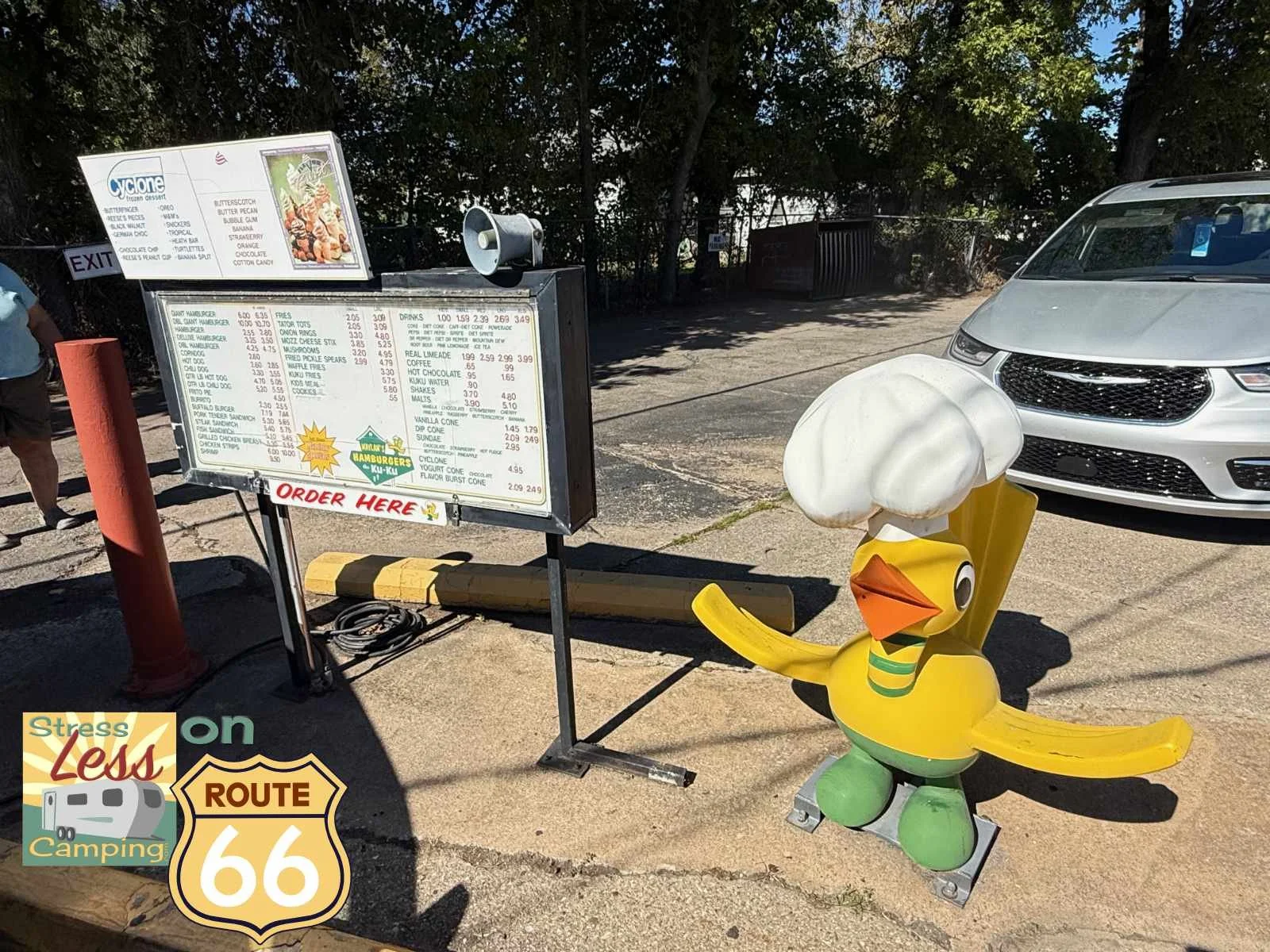
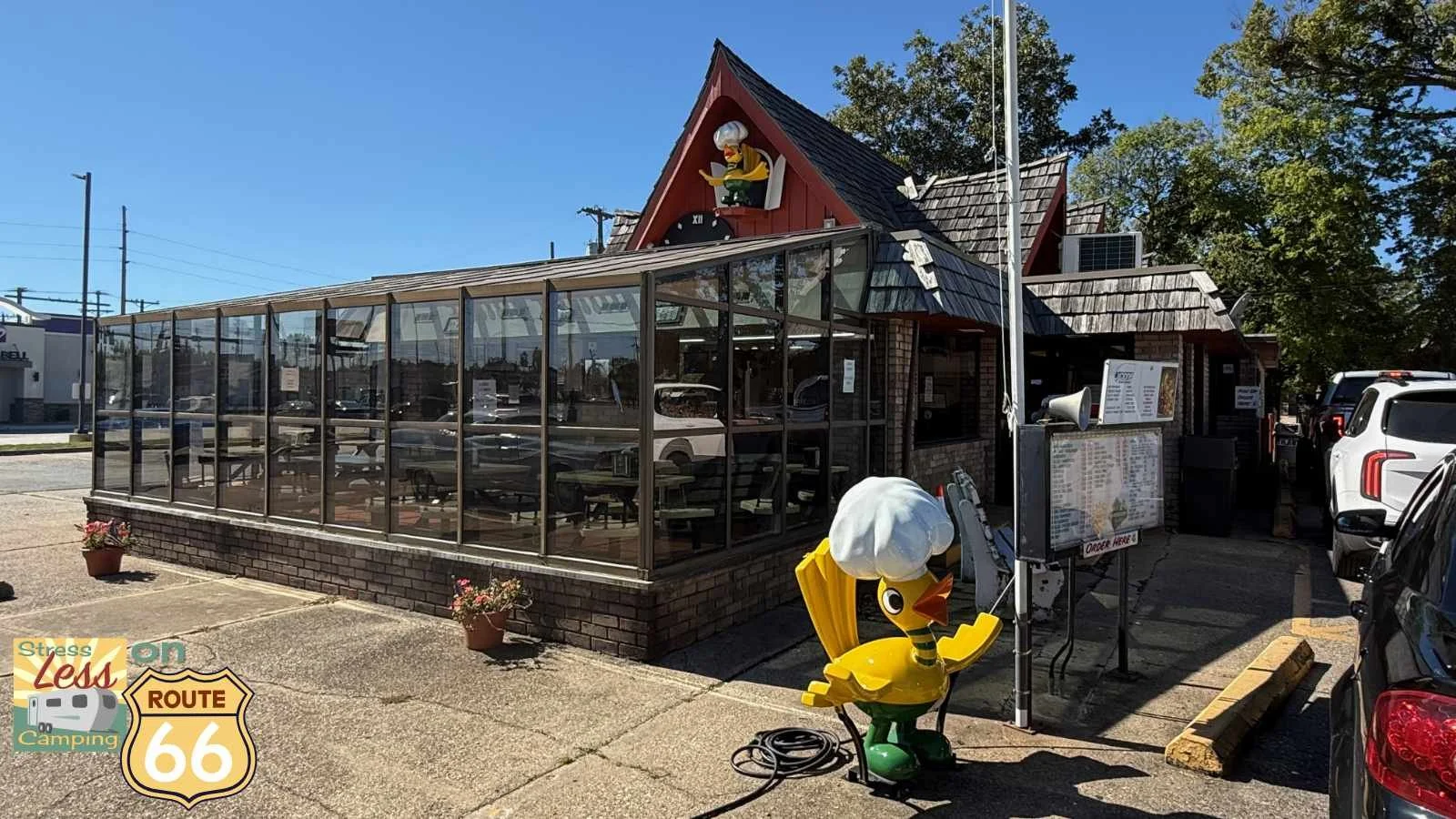
Through the windows we saw all sorts of trophies and cuckoo clocks and other things we wish we had been able to experience.
We did get their signature DeLuxe burgers and I got onion rings and a banana shake. All were top notch fast food and I can see why the line got longer, including one local sheriff truck, while we were there. The locals know a good thing when they eat it.
Waylan opened this franchise in 1967 and, to signify that, there’s a ’67 Ford sitting out in the parking lot. Nice.
Interestingly in 1977 a McDonald’s came to town and Waylan stuck to it and actually said that he doubled his business. According to an interview McDonald’s actually changed people’s behavior to where they were more used to going out to eat.
Oklahoma Historical Society
In July 2026, Waylan’s Ku-Ku Burger was added to the National Register of Historic Places, recognizing its importance as a commercial landmark along historic Route 66. That makes a stop here even more meaningful for travelers interested in preserving the history of the Mother Road.
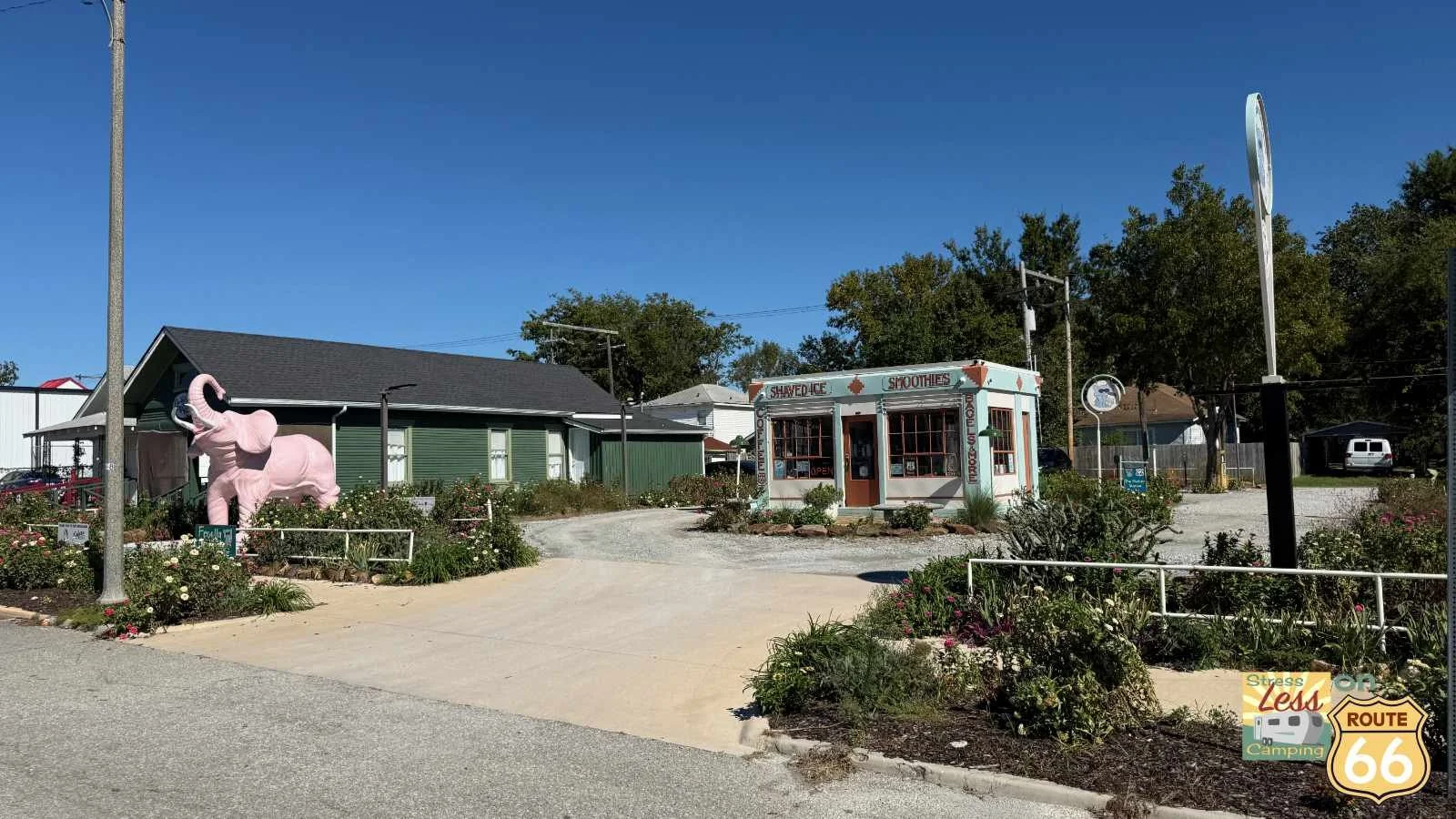
Froella the Pink Elephant
Of course we did a drive-by to check out Froella, the pink elephant who greets visitors on Route 66 at The Frozen Elephant, a shave ice stand. This is one of the very many vintage filling stations on Route 66 that is filling visitors in a different way than originally designed.
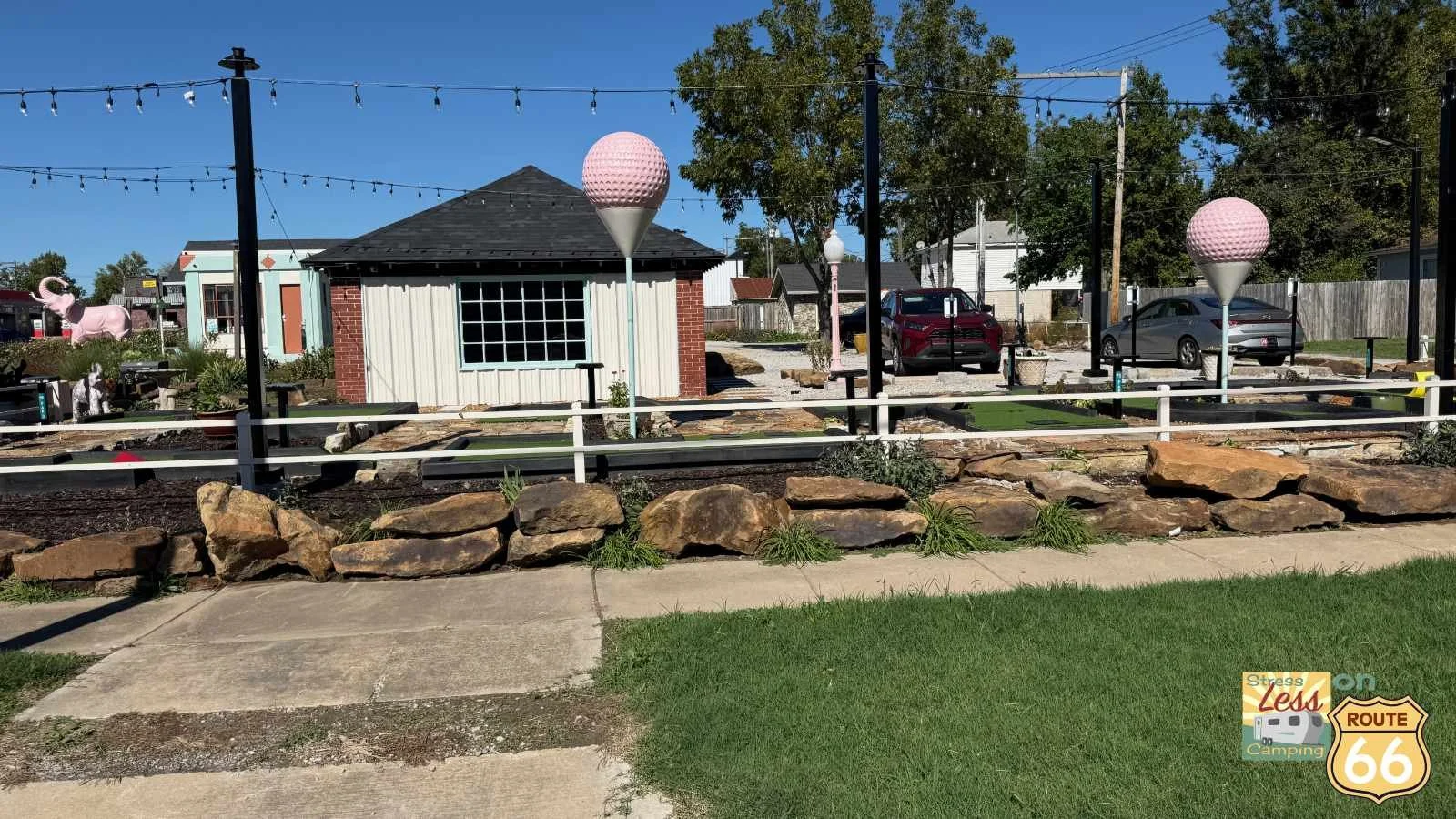
Recently a miniature golf course was added to the business as well in a miniature golf course at Froella’s.