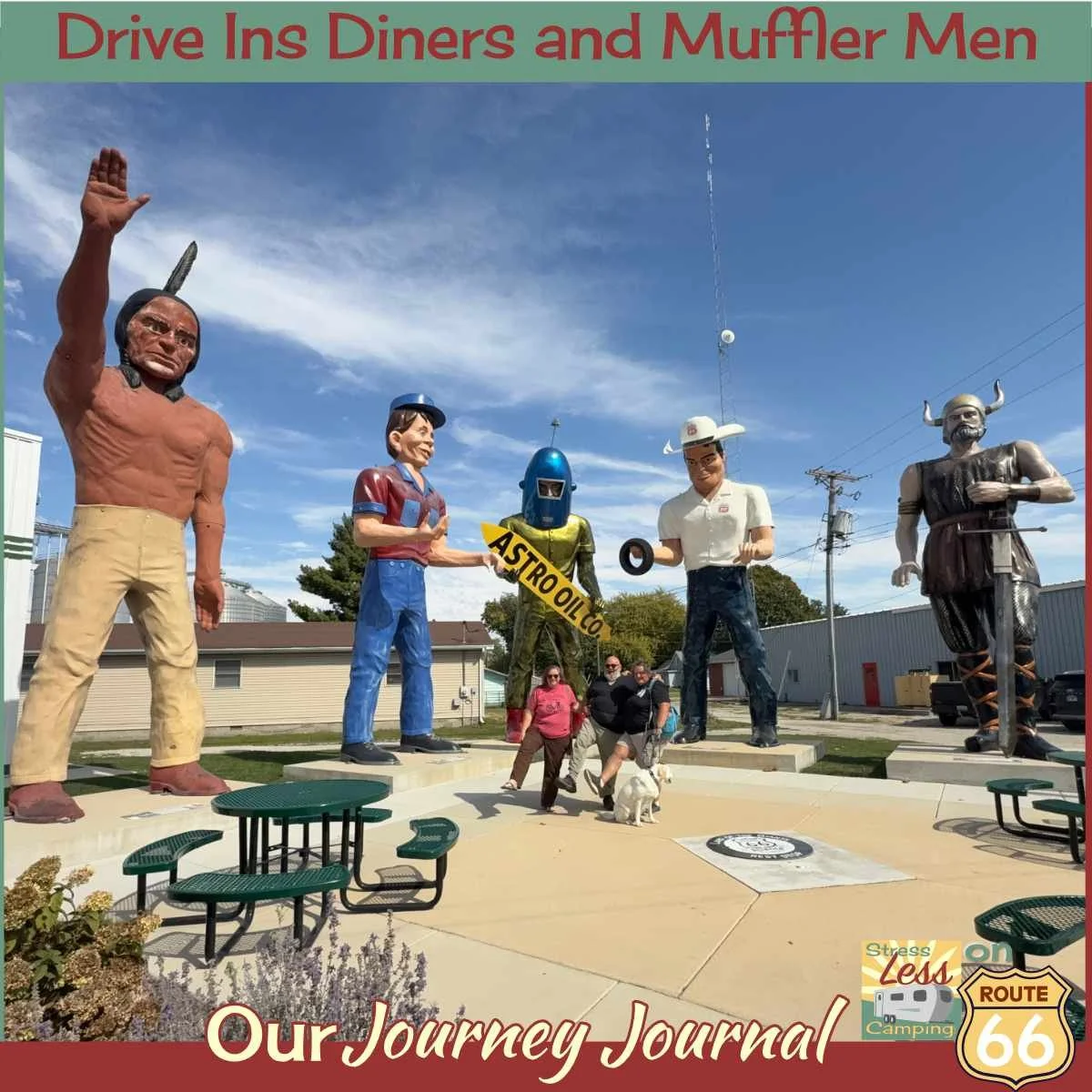
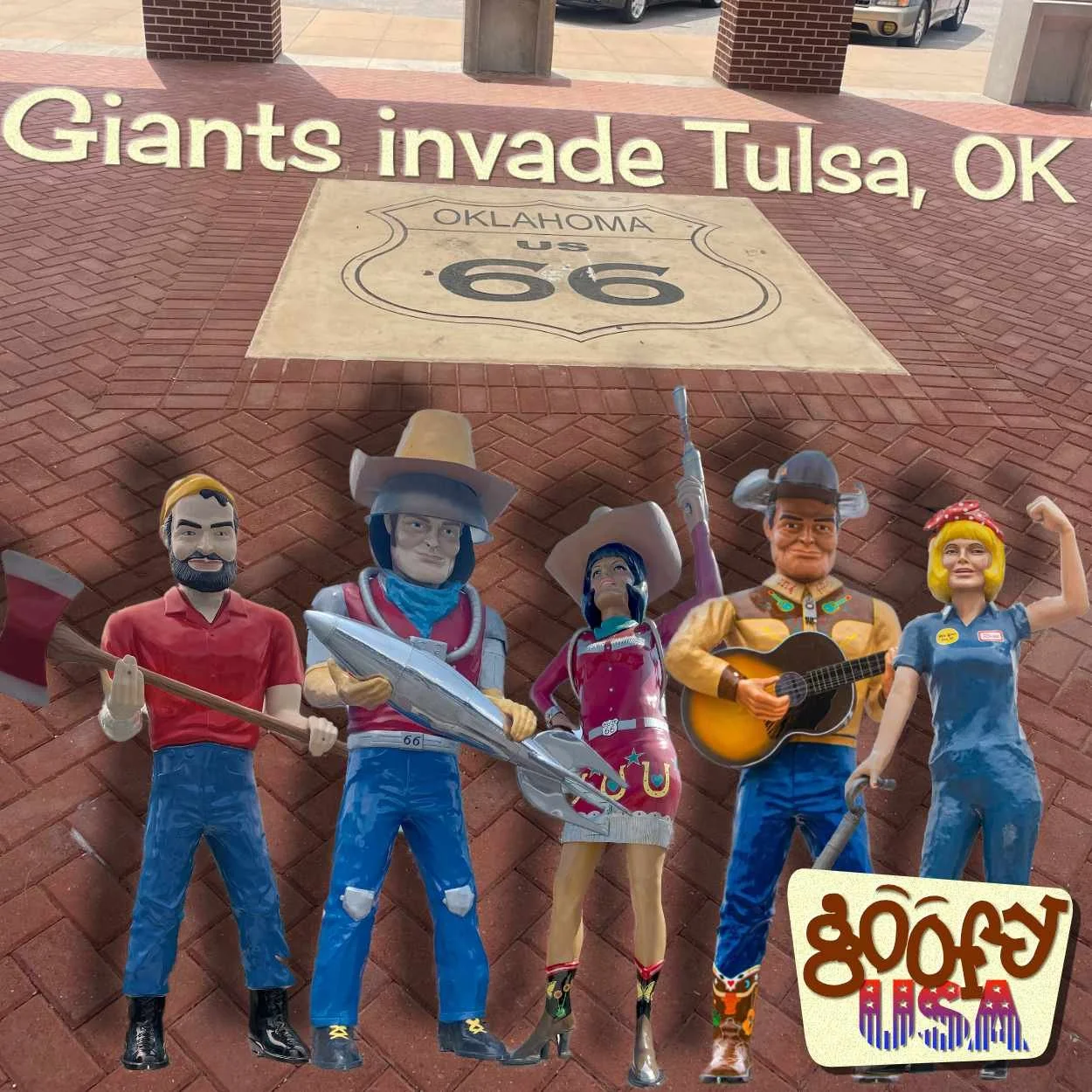
The giants invading Tulsa, Oklahoma
Tulsa Oklahoma’s Muffler Man Invasion
The town of Tulsa, Oklahoma has been invaded - by giants. These Giants started back in the 1960s but they’ve come alive again thanks to a few enthusiastic individuals and now they’ve descended on Tulsa in a big way. What are we talking about?
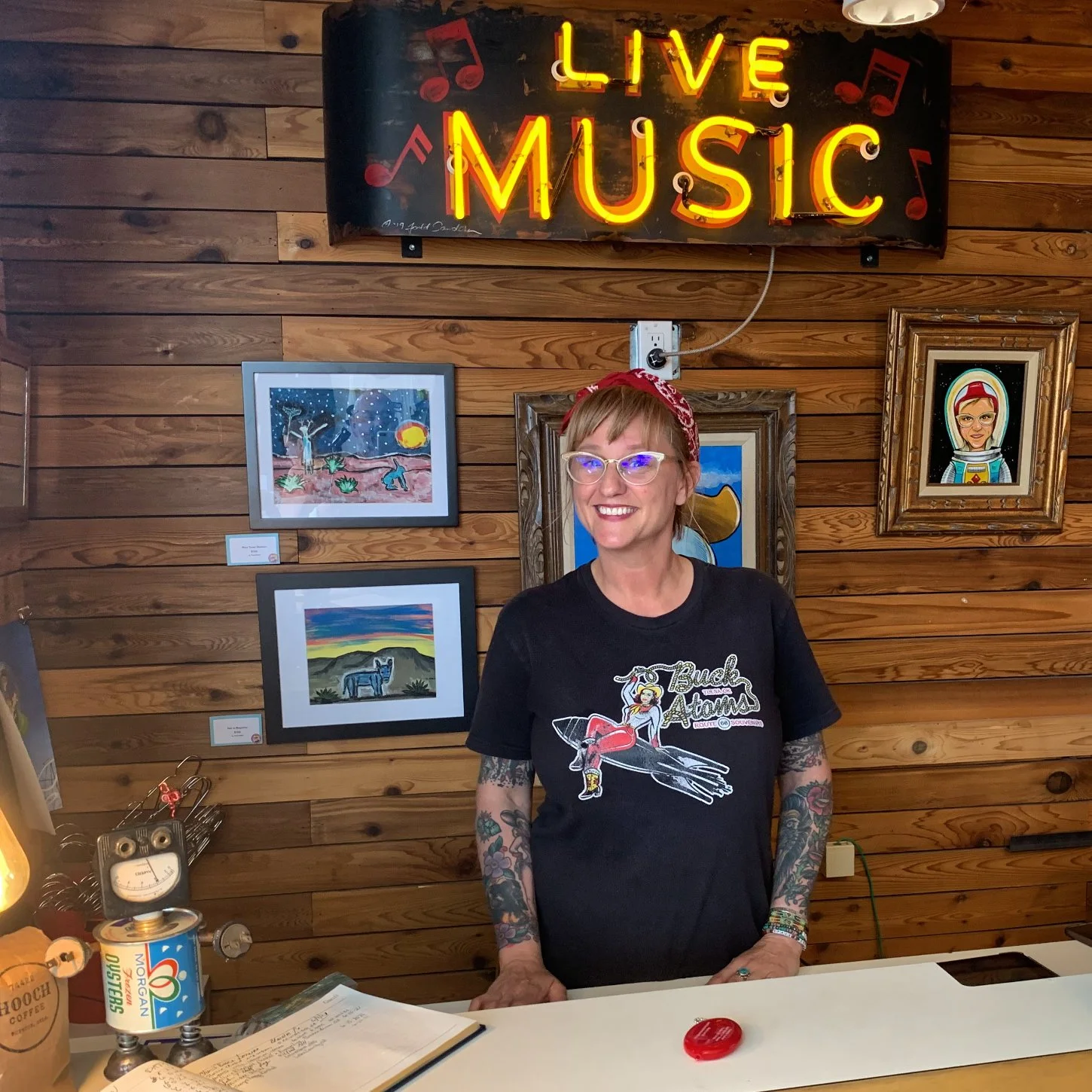
Mary Beth Babcock behind the counter at Buck Atom’s Cosmic Curious
Muffler Men! And women, too! These Giant fiberglass folk are making a huge resurgence in Tulsa thanks to the passion of MaryBeth Babcock.
The Muffler Men were originally intended as advertising specialties to bring people into a business. We have a full story about the history of these Muffler Men which you can read at our home on the web linked in the show notes for this episode.
Much of this invasion is taking place in the MeadowGold district of Tulsa which was so named because Meadow Gold Dairy was once there and, while the dairy is now just a memory, they left behind an incredible neon sign that has some beautiful details which light-up at night.
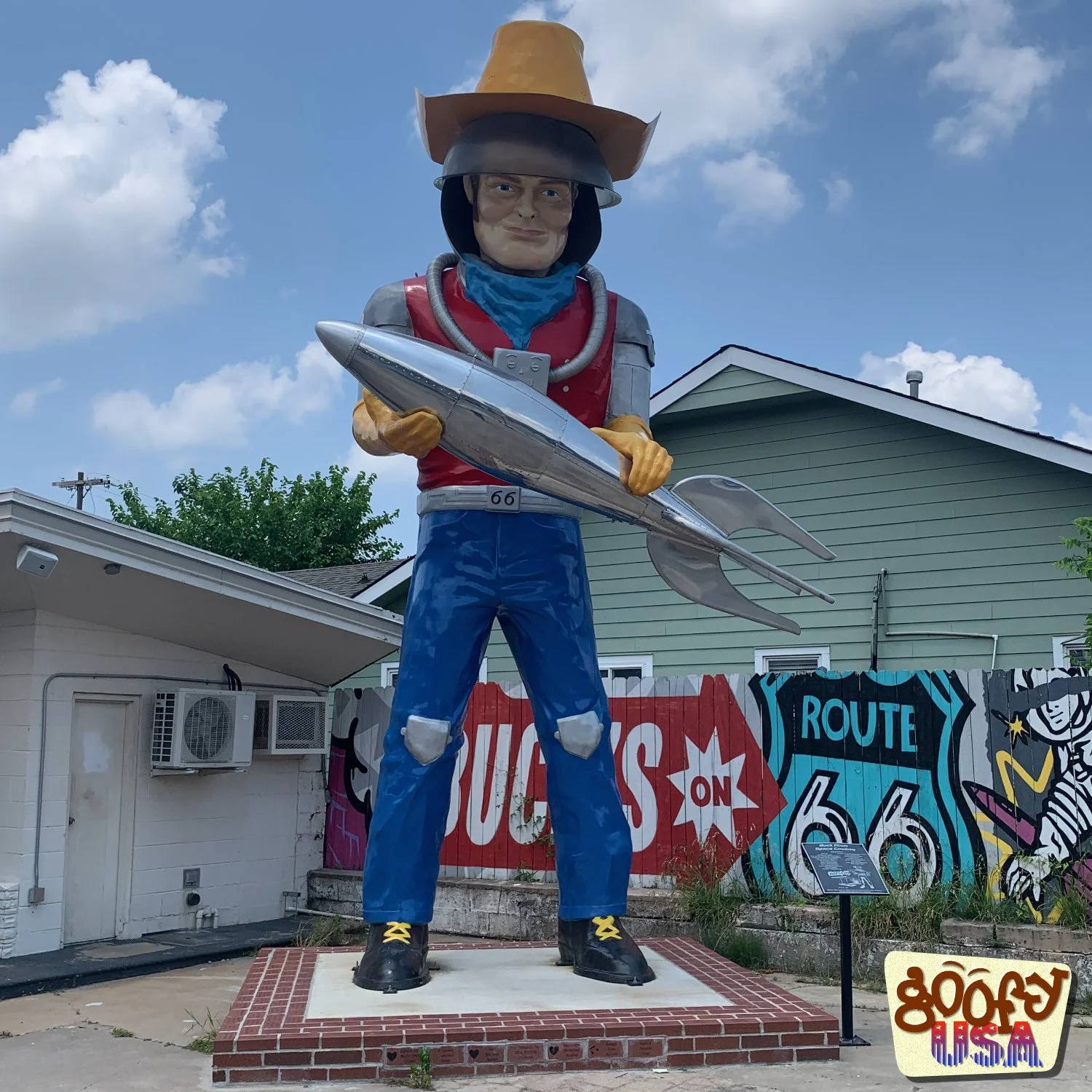
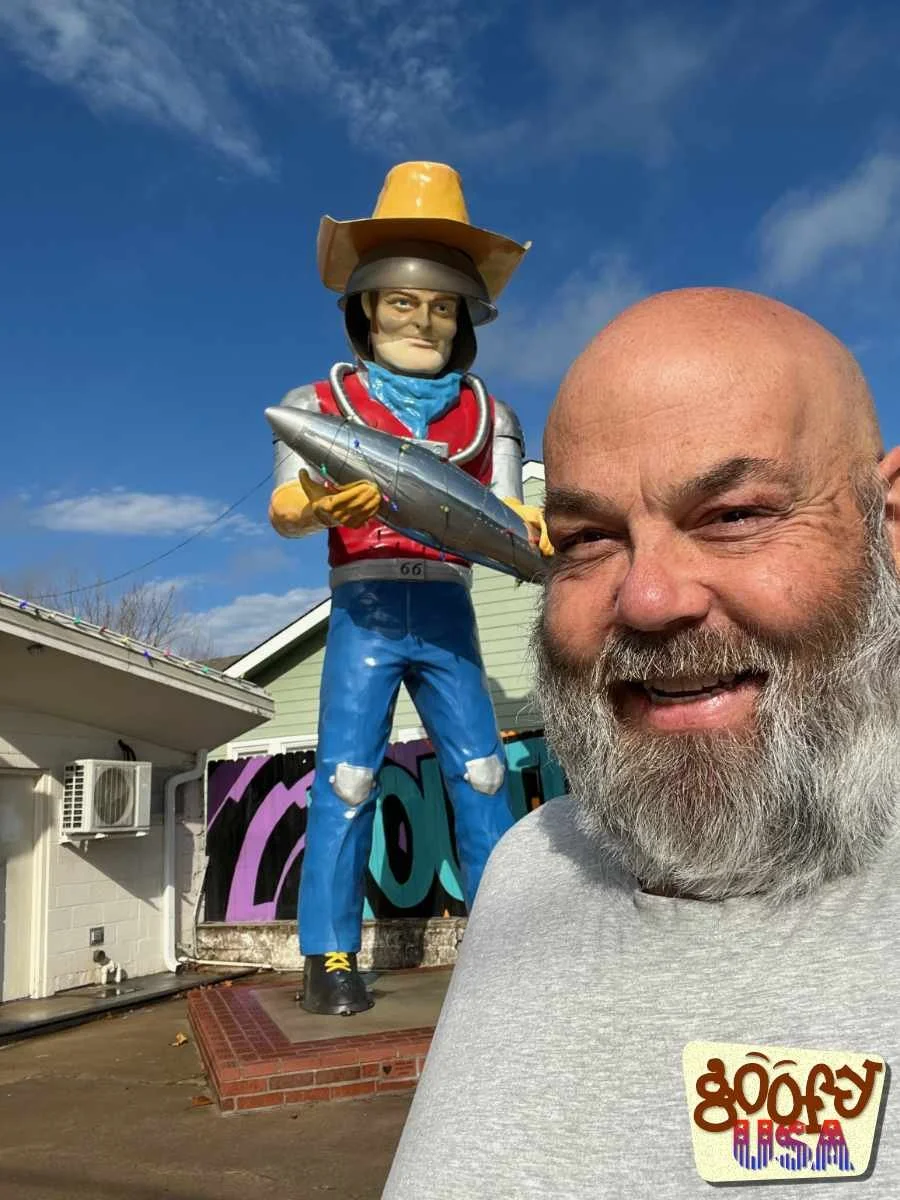
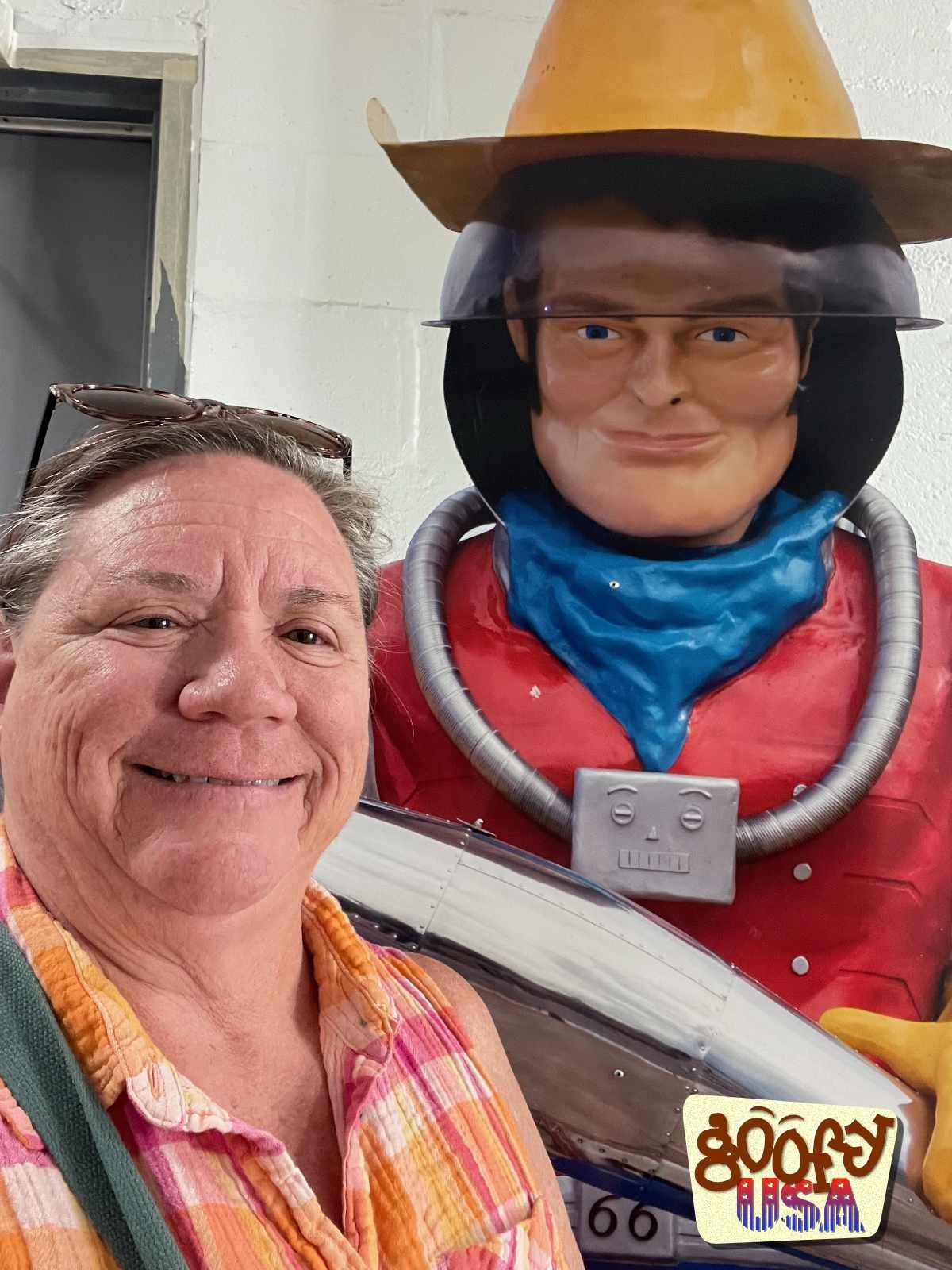
The first new Muffler Man to descend on Tulsa was Buck Atom, the Space Cowboy who, according to Mary Beth Babcock, landed to help revitalize Route 66 and he sure has.
The idea was a souvenir shop on Route 66 so Mary Beth bought an old Pemco gas station and came up with the name and the mascot.
Working with Joel Baker from American Giants, who owns the giants that are on display in Atlanta, Illinois at the American Giants museum, he collaborated with MaryBeth and Mark Cline of Enchanted Castle Studios in Virginia to come up with Buck Atom, a 21-foot-tall Muffler man with a cowboy hat and a space helmet!
Fast forward 6 years and it worked - we are among the many people who have sought-out curious from Buck Atoms and made a special trip just to stop there on our way through Oklahoma, making a special trip just to say hello to Buck.
But then MaryBeth wasn’t done. Poor Buck was lonely so she went back to Mark Cline and together came up with his 19’ tall girlfriend, Stella Atom. And, again, Stella brought us back to Tulsa to check this newest addition out.
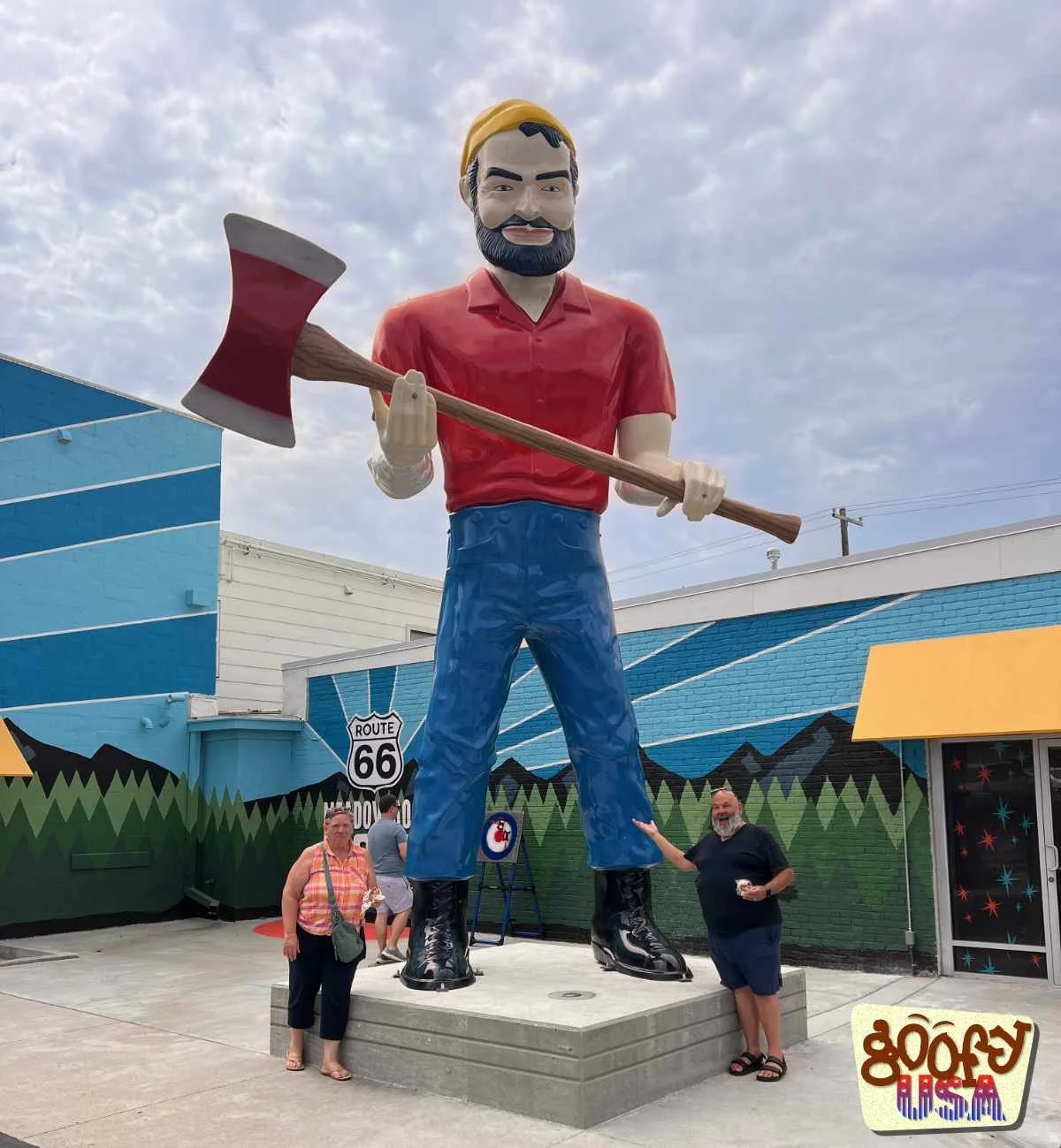
Meanwhile MaryBeth was opening another venture across the street that to feature local artisans and does with over 50 being represented. She needed another Giant and, it turns out, Joel Baker had sold one to someone in Oklahoma years ago but it never saw the light of day. Yup, someone bought a Giant and they were storing it. So, Mary Beth worked with them and that original lumber jack Giant now stands tall in front of the artists collection, which is named after him, and is called Meadow Gold Mack, the Friendly Lumberjack.
We were fortunate enough to be there for the grand opening of Meadow Gold Mack’s and got to check it out. There is so much to see there and also some locally-made ice cream. Yum.
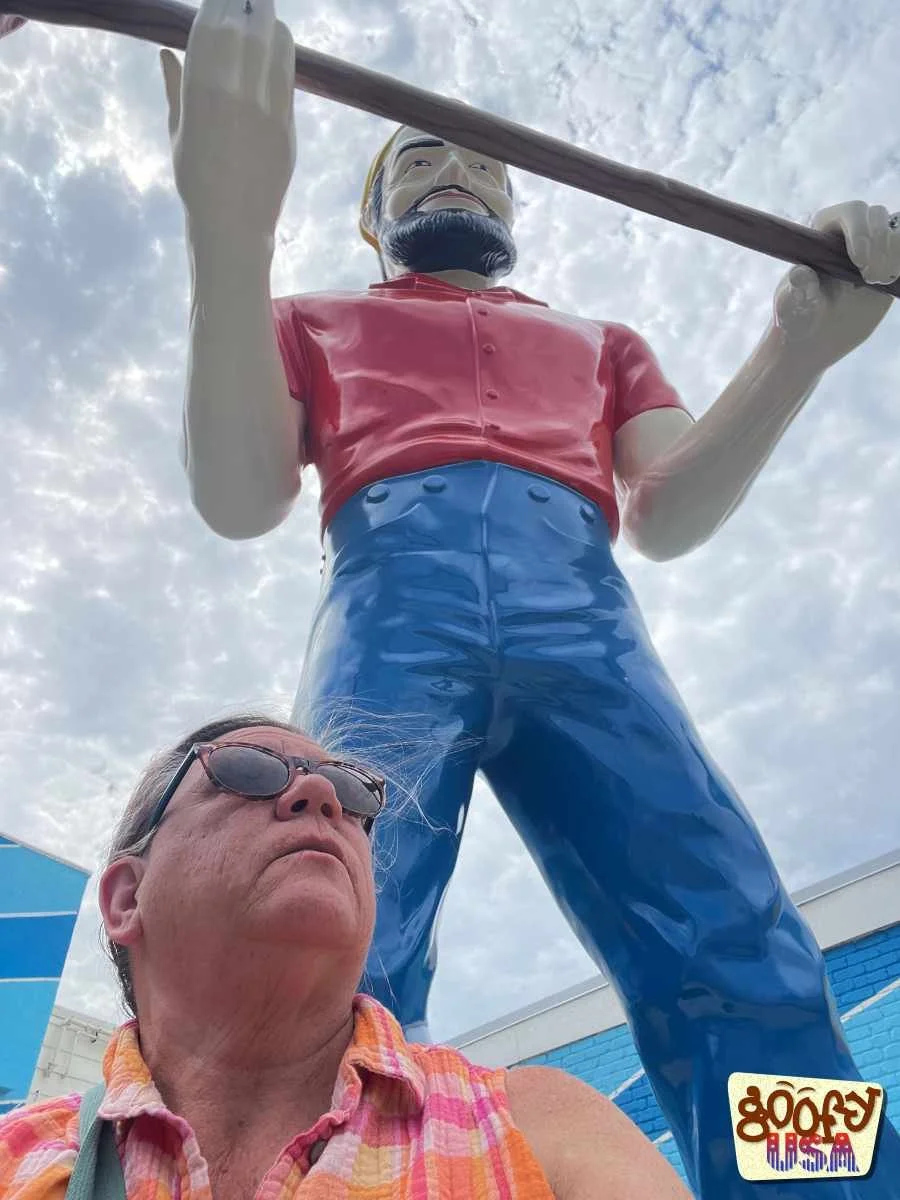
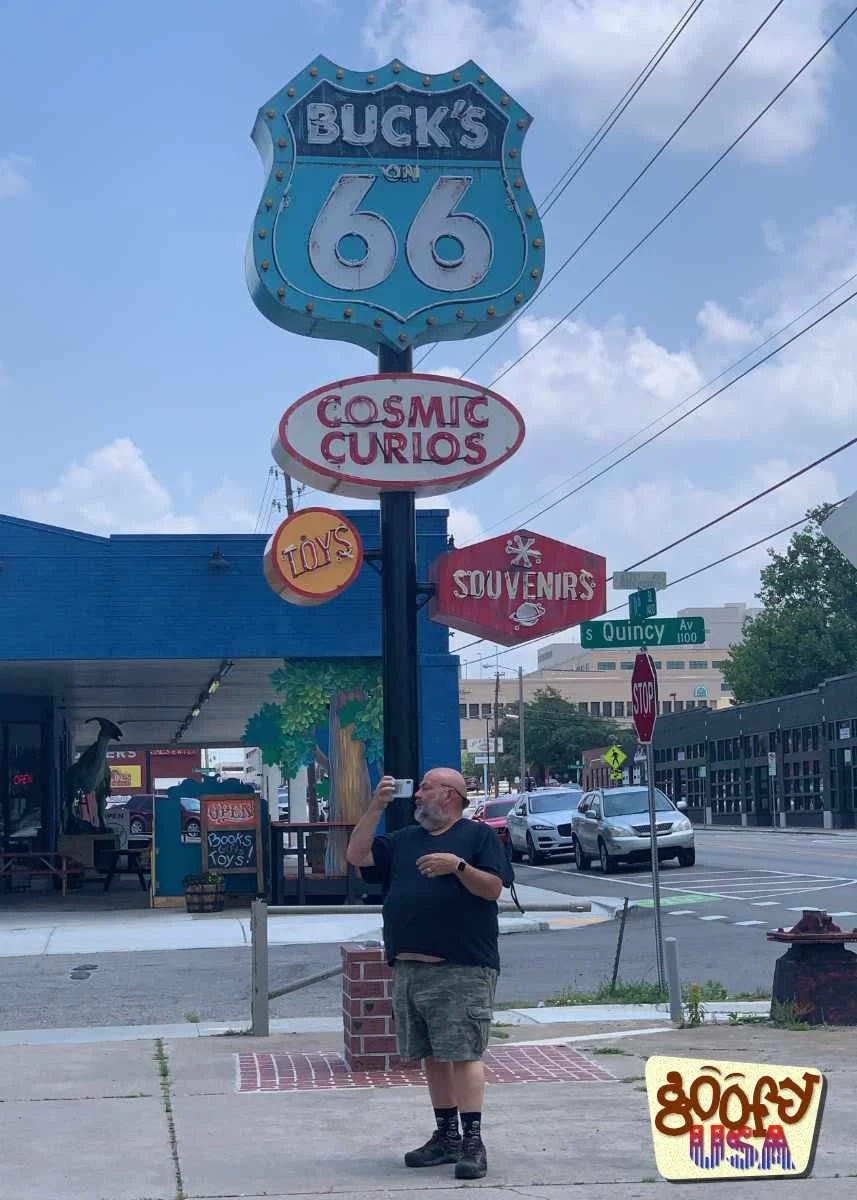
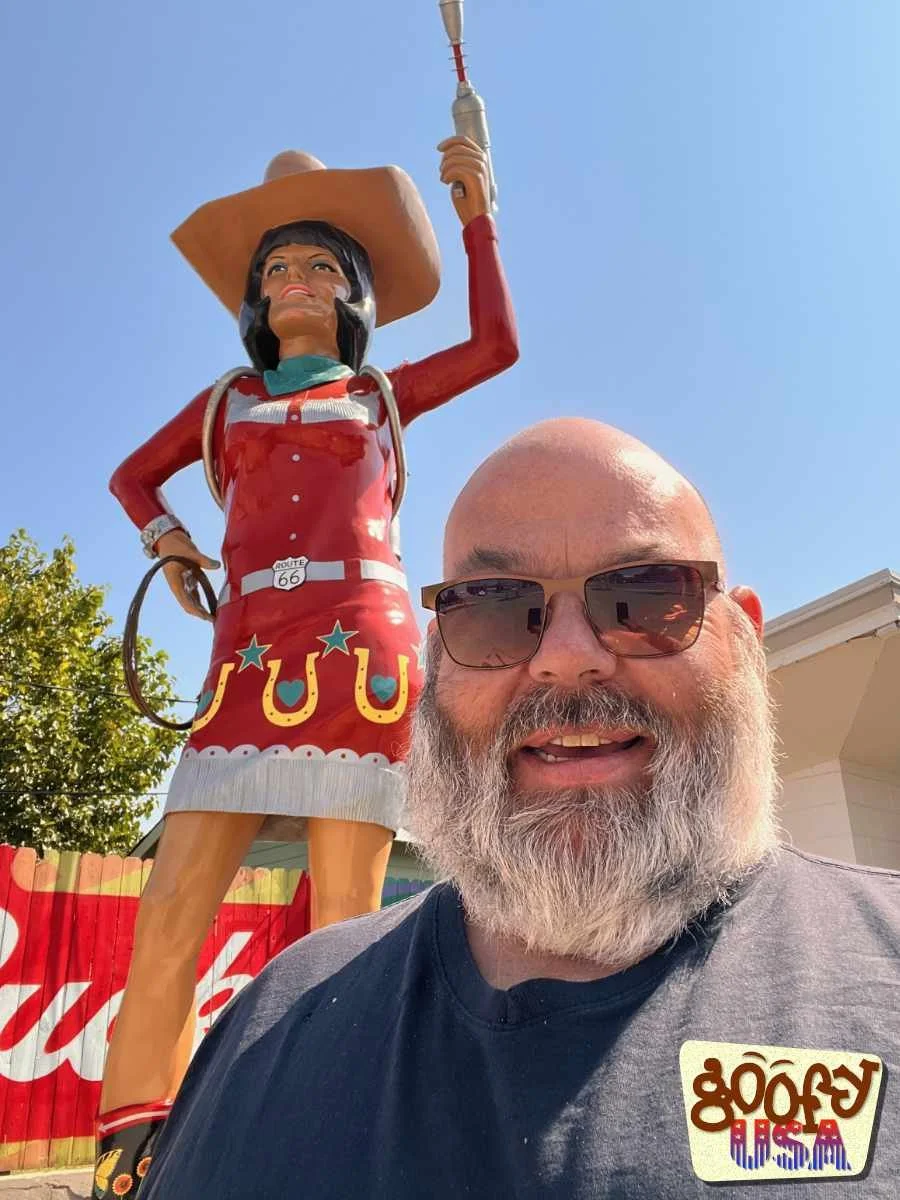
Oh, and the Meadow Gold District also has a number of places to eat including Ike’s Chili which has been in Tulsa since 1908! Will Rogers is one of the famous former customers and Martha Stewart has even called Ike’s the best chili in the US. But there’s more, Ike’s is now home to another new Giant - a Rosie the Riveter! We haven’t been to Ike’s but know that we will and we also plan to see Rosie.
And another giant arrived on the truck with Rosie - Cowboy Bob who’s the mascot for Buck’s Vintage, another newer store in Tulsa.
These American Giants are proving the value of these huge fiberglass friends is just as significant now as it was when they first started popping up on Route 66. The Meadow Gold District, thanks to the passion and vision of Mary Beth Babcock, has come back alive. We’ve already shared Atlanta, Illinois and the Muffler Man Museum.
So, perhaps, oversized people continue to be a great way to advertise a business but they are something else - Goofy USA!
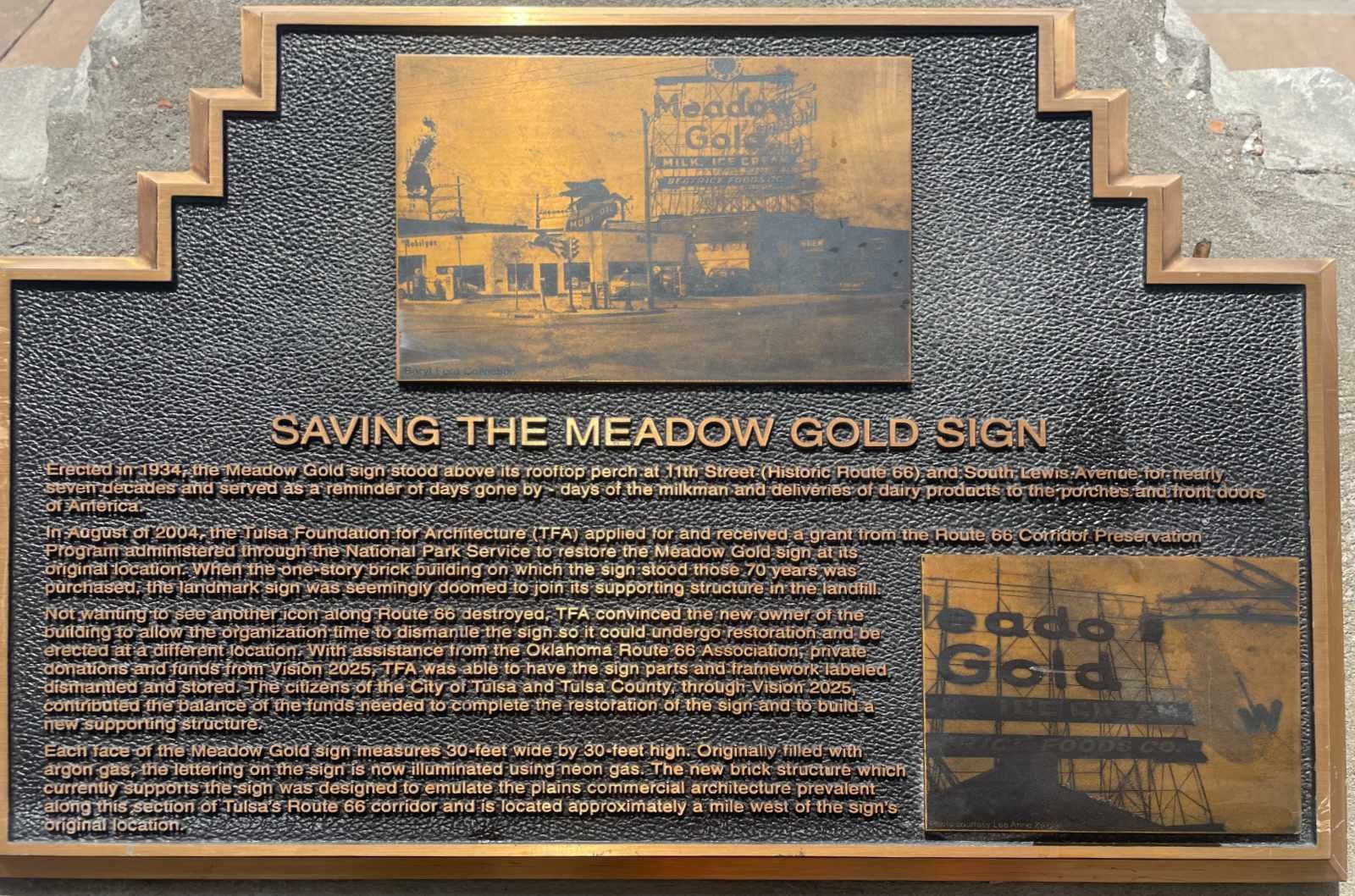
Saving the Meadow Gold sign plaque
The history of the Meadow Gold sign
Erected in 1934 the Meadow Gold sign stood above its rooftop perch at 11th Street (Historic Route 66) and South Lewis Avenue for nearly seven decades and served as a reminder of days gone by days of the milkman and deliveries of dairy products to the porches and front doors of America.
In August of 2004, the Tulsa Foundation for Architecture (TFA) applied for and received a grant from the Route 66 Corrido Preservation Program administered through the National Park Service to restore the Meadow Gold sign at its original location. When the one story brick building on Which the sign stood those 70 years was purchased, the landmark sign was seemingly doomed to join its supporting structure in the landfill.
Not wanting o see another icon along Route 66 destroyed, TFA convinced he new owner of the building to allow the organization time to dismantle the sign so it could undergo restoration and be erected at a different location. With assistance from the Oklahoma Route 66 Association, private donations and funds from Vision 2025, TFA was able to have the sign parts and framework labeled, dismantled and stored. The citizens of the City of Tulsa and Tulsa County, through Vision 2025, contributed the balance of the funds needed to complete the restoration of the sign and to build a new supporting structures
Each face of the Meadow Gold sign measures 30 feet wide by 30-feet high. Originally filled with argon gas, the lettering on the sign is now illuminated using neon gas. The new brick structure which currently supports the sign was designed to emulate the plains commercial architecture prevalent along this section of Tulsa's Route 66 corridor and is located approximately a mile west of the sign's original location.
The history of Meadow Gold
George E. Haskell and William W. Bosworth lost their jobs with the bankrupt Fremont Butter and Egg Company in 1893. A year later in Beatrice, Nebraska, Haskell and Bosworth formed a partnership and began purchasing butter, milk and eggs from local farmers for resale. Ultimately they began churning and packaging butter in their own plant and distributing it to area grocery stores, restaurants, and hotels under their own label. By the turn Of the century, the company was shipping dairy products across the Midwest.
During the same period approximately 100 miles to the southeast the Continental Creamery Company of Topeka, was producing butter and competing with Haskell and Bosworth. On November 12, 1901, Continental was granted a trademark by the U.S. Patent Office for the name "Meadow Gold” a name that had been selected by Continental employees through a contest in search for a name to describe the golden quality of their fresh, creamery butter.
On March 1, 1905, the company formed by Haskell and Bosworth was incorporated as the Beatrice Creamery Company of lowa, That same year, Continental was purchased by Beatrice and its Meadow Gold, brand joined the Beatrice Creamery Company family of products.
Beatrice moved to Chicago in 1913 and by the 1930s, around the time the Meadow Gold sign was originally erected, the company was one of the major dairy companies in the United States. By the beginning of World War Il, the Meadow Gold brand was a household name in much of America.
More to see
American Giants’ video about the origin of Buck Atom and the giants of the Meadow Gold District
American Giants video series
Roadside Americana - Muffler Men along with a map of the various muffler men.
Mark Cline - Enchanted Castle Studios
Our interview with the American Giants Museum in Atlanta, Illinois